17 Apr 2026 • 8 Minutes Read
Written by Elore Digital Team
How to Use Google Analytics for SEO Insights
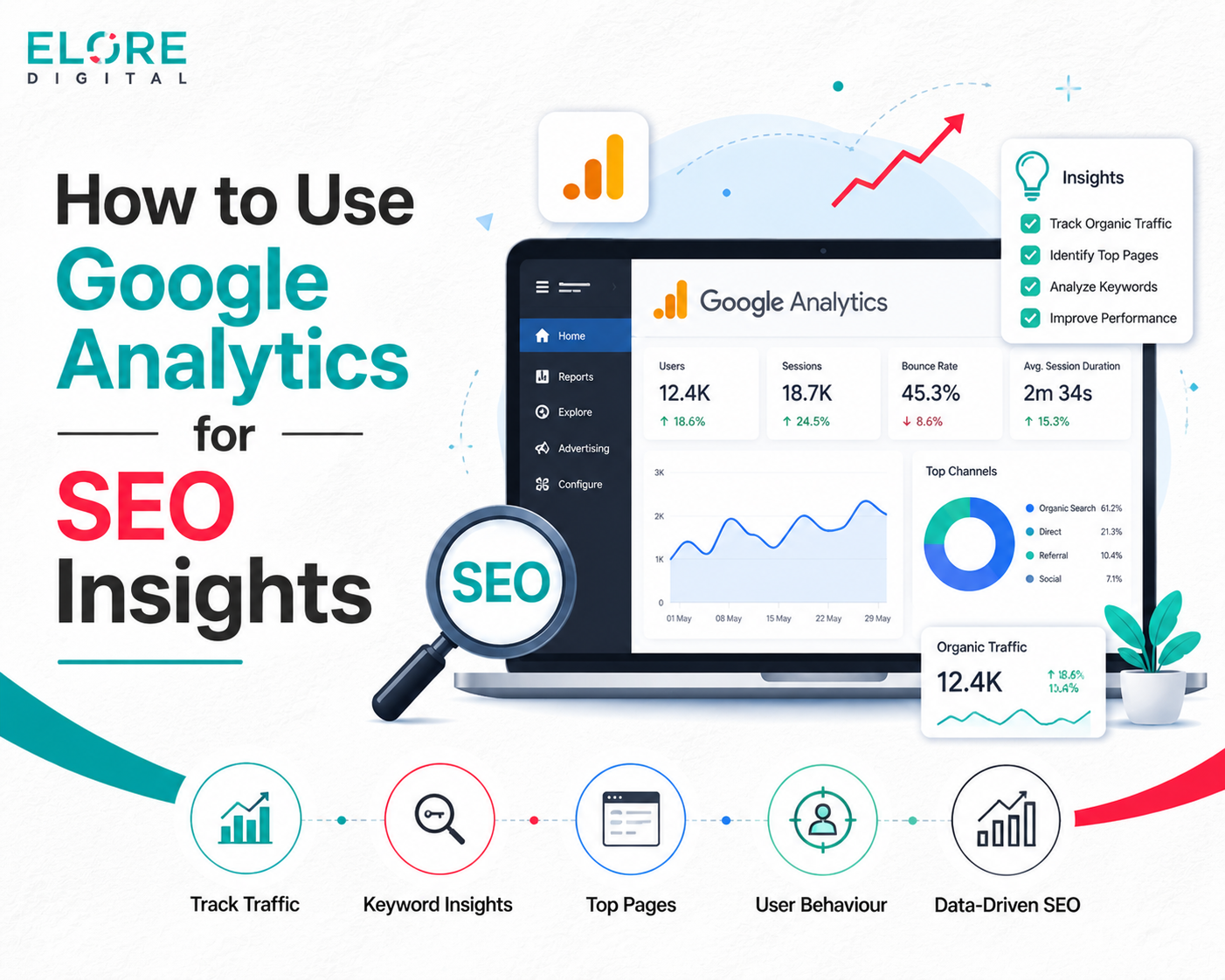
A visual representation of using Google Analytics to track traffic, analyse user behaviour, and gain data driven SEO insights for better performance and rankings
In today’s digital world, understanding your website visitors is very important for growth. Google Analytics helps you see how people find your website and what they do after they arrive. Successful websites depend on real data instead of guesswork. Search engine optimization is not only about keywords anymore. It is also about user experience and engagement. When you understand your audience better, you can improve your rankings and content strategy. This guide explains how to use Google Analytics in a simple and effective way.
1. Understanding Google Analytics for SEO
Google Analytics has become more advanced and smarter in recent years. It does not only track visitors but also shows how they behave on your website. This helps you understand what works and what needs improvement. Search engines focus more on user experience than ever before. That is why analytics plays a key role in SEO. It helps you make better decisions based on real data. With proper use, you can improve both traffic and engagement.
1.1 What is Google Analytics and Why It Matters
Google Analytics is a tool that tracks and reports website activity. It shows how many people visit your site and where they come from. For SEO, it helps you see which pages perform well in search results. You can also understand how users interact with your content. This information helps you improve your website. It is an important tool for every website owner.
1.2 Difference Between SEO Data and Analytics Data
SEO data focuses on search rankings and keywords. Analytics data focuses on user behavior and actions on your site. Both types of data are important for growth. SEO helps bring visitors to your site. Analytics helps you understand what they do after they arrive. When you use both together, you get better results. This combination helps improve your strategy.
1.3 Key SEO Metrics You Should Track
Some important metrics include organic traffic, bounce rate, and session time. These metrics show how well your website is performing. They also help you understand user engagement.
Tracking these regularly helps you find problems early. It also shows what is working well. These insights are important for improving SEO.
2. Setting Up Google Analytics for SEO Tracking
A proper setup is very important for accurate results. If your analytics is not set correctly, your data may be wrong. Google Analytics uses an advanced tracking system that allows you to see detailed user actions. Setting up goals and connections is also important. A good setup gives you reliable information. This helps you make better decisions.
2.1 Creating and Configuring Your Analytics Account
First, create your Google Analytics account and add your website. Install the tracking code on all your pages. Make sure it is working correctly. Set up your data streams to collect accurate information. This step is the foundation of your analytics. Without it, you cannot track performance properly.
2.2 Connecting Google Search Console with Google Analytics
Connecting Search Console gives you more detailed
search data. You can see which keywords bring visitors to your site. It also shows impressions and click rates. This information helps improve your content. When both tools are connected, you get better insights. This makes your SEO strategy stronger.
2.3 Setting Up Goals and Conversions for SEO
Goals help you track important actions like sign ups or purchases. Conversions show if your SEO efforts are working. Setting them up helps you measure success. You can also understand user journeys better. This helps improve your website performance. It is important for long term growth.
3. Tracking Organic Traffic Performance
Organic traffic is the main goal of SEO. Google Analytics shows how much traffic comes from search engines. It also helps you understand which pages perform best. This information helps you improve your strategy. Regular tracking is very important. It helps you grow your website steadily.
3.1 How to Identify Organic Traffic Sources
You can find organic traffic in the acquisition section. Select organic search to see the data. This shows which search engines send visitors. It also shows how your traffic changes over time. This helps you understand your performance. It is useful for planning improvements.
3.2 Analyzing Landing Pages for SEO Growth
Landing pages are the first pages users see. You should check which pages get the most traffic. Look at how users interact with them. Improve pages that do not perform well. This helps increase engagement. Better pages lead to better rankings.
3.3 Understanding User Behavior from Search Visitors
User behavior shows how people use your website. It includes actions like clicks and scrolling. This helps you understand what users like. You can improve your content based on this data. Better experience keeps users on your site longer. This improves SEO results.
4. Keyword Insights Using Google Analytics
Keywords are still important for SEO. Google Analytics helps you understand how keywords perform. When connected with Search Console, you get better data. This helps you find new opportunities. You can improve your content strategy. Strong keyword use increases visibility.
4.1 Finding Hidden Keywords Through Search Console Integration
Search Console shows keywords that bring traffic. Some keywords may surprise you. These are often long phrases with good potential. You can use them to create new content. This helps you reach more people. It is a smart way to grow traffic.
4.2 Measuring Keyword Performance and Click Rates
Click rate shows how often users click your link. A higher rate means your title is attractive. You should monitor this regularly. Improve titles and descriptions if needed. This helps increase traffic. Better click rates improve your ranking.
4.3 Identifying High Performing and Low Performing Keywords
Find keywords that bring the most traffic. Also identify those that do not perform well. Improve or replace weak keywords. Focus more on strong ones. This helps you grow faster. It makes your SEO strategy more effective.
5. Analyzing User Behavior for SEO Improvement
User behavior is very important in modern SEO. Search engines want users to have a good experience. Analytics helps you understand this behavior. You can see what users like and dislike. This helps you improve your website. Better experience leads to better rankings.
5.1 Bounce Rate and Engagement Metrics Explained
Bounce rate shows how many users leave quickly. A high rate may mean poor content or design. Engagement metrics give more details about user actions. Improving these helps your SEO. You should focus on user satisfaction. Good content keeps users interested.
5.2 Average Session Duration and Its SEO Impact
Session duration shows how long users stay on your site. Longer time means better content quality. This is a positive signal for search engines. You should create engaging content. Use clear structure and useful information. This helps keep users on your site.
5.3 User Journey Analysis for Better Optimization
User journey shows the path users take on your site. It helps you find where users leave. Fixing these points improves performance. A smooth journey keeps users engaged. This also increases conversions. It is important for SEO success.
6. Using Reports to Improve SEO Strategy
Reports give you useful information about your website. They help you understand what is working and what is not. Different reports focus on different areas. Using them properly improves your strategy. Data based decisions lead to better results.
6.1 Acquisition Reports for Traffic Insights
Acquisition reports show where your traffic comes from. This helps you understand your sources. You can focus more on organic traffic. It also helps you improve weak areas. This strengthens your SEO strategy. It guides your planning.
6.2 Behavior Reports for Content Performance
Behavior reports show how users interact with your pages. You can see which content performs best. Use this information to improve other pages. It helps you create better content. Strong content improves engagement. This boosts your SEO.
6.3 Conversion Reports to Measure SEO Success
Conversion reports show how many users complete goals. This tells you if your SEO is working. High conversions mean success. Low conversions need improvement. This helps you adjust your strategy. It supports business growth.
7. Advanced SEO Insights with GA4
GA4 provides deeper insights into user behavior. It focuses on events instead of simple visits. This helps you understand actions in detail. It also uses smart predictions. These features make SEO more effective. It is important for modern websites.
7.1 Key Features of GA4 for SEO
GA4 tracks users across devices. This gives a complete picture of behavior. It also offers advanced reports. These features help improve decisions. They make your strategy stronger. It is useful for long term growth.
7.2 Event Tracking and Custom Reports
Event tracking shows specific user actions. Custom reports give detailed insights. You can focus on what matters most. This helps you improve performance. It also saves time. It makes analysis easier.
7.3 Predictive Metrics and AI Based Insights
Predictive data helps you understand future trends. This allows better planning. It improves targeting and strategy. AI based insights make analysis faster. They help you stay ahead. This is important for modern SEO.
8. Common Mistakes to Avoid in SEO Analytics
Many people make mistakes when using analytics. These mistakes can affect results. It is important to avoid them. Proper understanding leads to better decisions. This helps improve your website performance.
8.1 Ignoring Data Accuracy Issues
Wrong data leads to wrong decisions. Always check your tracking setup. Make sure everything is working correctly. Regular checks are important. Accurate data is the key to success. It improves your SEO results.
8.2 Misinterpreting Traffic Metrics
Not all traffic is useful. Some visitors may leave quickly. Focus on quality instead of quantity. Look at engagement and conversions. This gives a better picture. It helps you improve your strategy.
8.3 Not Updating Tracking Settings Regularly
Old settings may not give correct data. Update your tracking regularly. Use new features when available. This keeps your data accurate. It also improves insights. Staying updated is important.
9. Best Practices to Maximize SEO Results Using Analytics
Following best practices helps you get better results. It improves your strategy over time. Consistent effort is important. Analytics helps you stay on track. It supports continuous growth.
9.1 Regular Monitoring and Reporting
Check your data regularly. Weekly or monthly reports are helpful. They show trends and changes. This helps you fix problems early. It keeps your performance stable. Regular tracking is important.
9.2 Combining Analytics with Other SEO Tools
Using multiple tools gives better insights. Combine analytics with keyword tools. This helps you understand your performance. It also improves your strategy. Better tools give better results. It supports growth.
9.3 Continuous Optimization Based on Data
SEO is not a one time task. You need to improve regularly. Use your data to make changes. Test different strategies. Keep what works best. This helps you grow over time.
10. Final Thoughts
Using Google Analytics effectively can completely change the way you approach your website growth. It gives you real insights into what your audience wants and how they interact with your content. Instead of guessing, you can make informed decisions that improve both traffic and engagement. When you regularly analyze your data, you start to notice patterns that help you refine your strategy. It also allows you to focus on what is actually working rather than wasting time on ineffective methods. By combining analytics with consistent content improvement, you create a strong foundation for long term success. It is important to stay patient because SEO results take time to grow. Small improvements based on data can lead to big results over time. The key is to stay consistent, keep learning, and adapt your strategy when needed. With the right use of Google Analytics, your website can achieve steady and sustainable growth.
10. Final Thoughts
Using Google Analytics effectively can completely change the way you approach your website growth. It gives you real insights into what your audience wants and how they interact with your content. Instead of guessing, you can make informed decisions that improve both traffic and engagement. When you regularly analyze your data, you start to notice patterns that help you refine your strategy. It also allows you to focus on what is actually working rather than wasting time on ineffective methods. By combining analytics with consistent content improvement, you create a strong foundation for long term success. It is important to stay patient because SEO results take time to grow. Small improvements based on data can lead to big results over time. The key is to stay consistent, keep learning, and adapt your strategy when needed. With the right use of Google Analytics, your website can achieve steady and sustainable growth.


Leave A Reply