14 Apr 2026 • 9 Minutes Read
Written by Elore Digital Team
How to Optimise Content for AI Search Engines
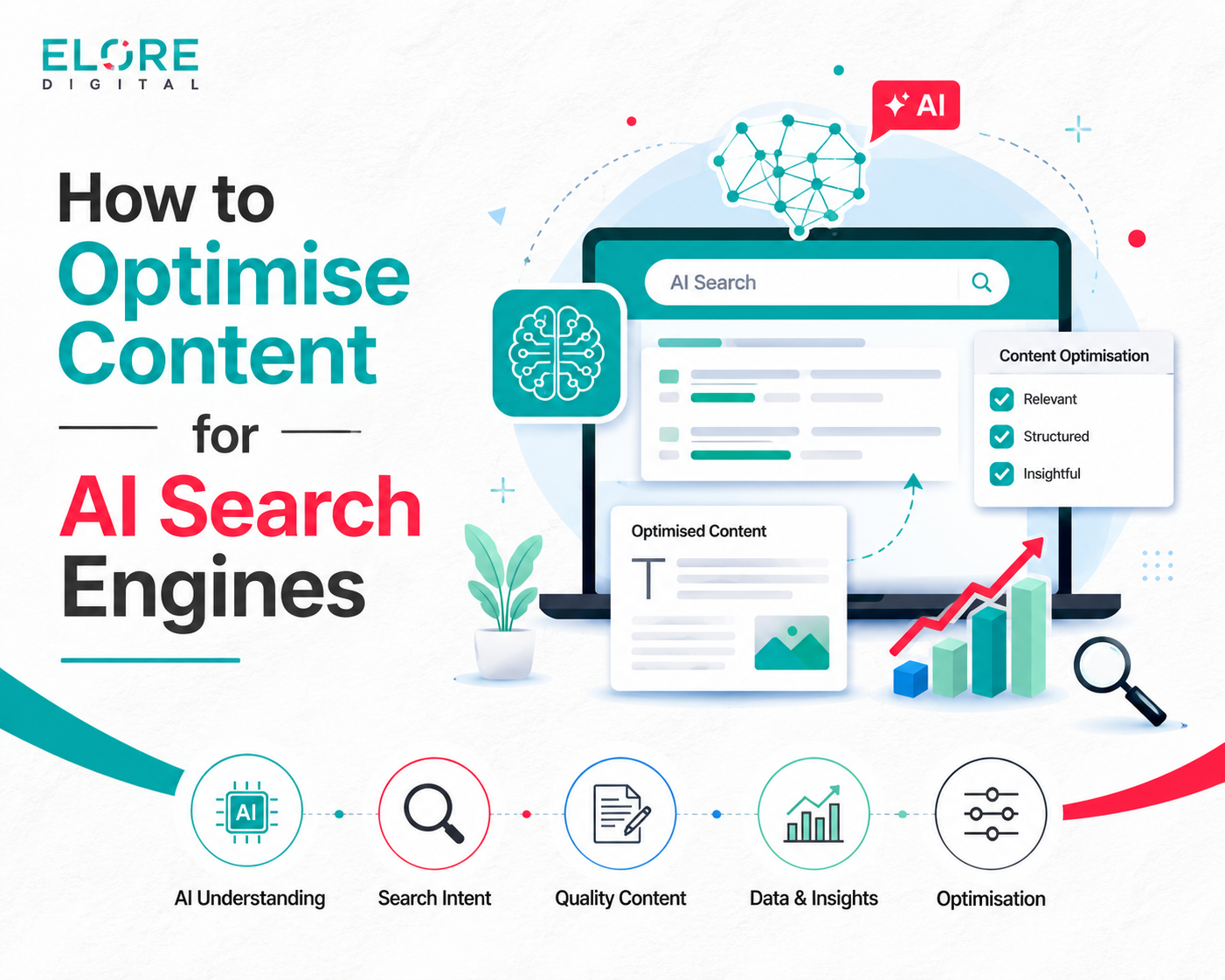
A modern visual showing how AI-powered search engines rank content using structured data, search intent, quality content, and optimisation strategies
AI search is changing how content is discovered online. Modern search engines no longer rely solely on keywords they focus on context, intent, and meaning. This means that content needs to be both high quality and understandable to humans. Writing for AI search involves providing value, clear explanations, and useful insights that match what users are really looking for. By aligning your content with these principles, you increase the chances of ranking higher, keeping readers engaged, and building long-term trust. Optimising for AI search is a combination of understanding technology and understanding your audience.
1. Understanding AI Search Engines
AI search engines are more advanced than traditional systems. They are designed to understand queries in a human-like way and provide results that truly answer user questions. To succeed in this environment, you need to know how these engines work and what they value. Understanding AI search helps you structure content that is meaningful, relevant, and likely to perform well. It also allows you to create content that connects better with real user needs, improving engagement and traffic. Knowing the mechanics behind AI search gives you a strong foundation for optimisation.
1.1 What Are AI Search Engines?
AI search engines use machine learning and artificial intelligence to understand user queries at a deeper level. They go beyond matching keywords and analyse context, synonyms, and even the intent behind a question. By understanding these factors, AI search can provide more accurate and helpful results. Unlike traditional search engines that focus mainly on ranking pages, AI search aims to deliver the answer users are truly looking for, whether through direct responses, featured snippets, or recommendations.
1.2 How AI Search Differs from Traditional Search Engines
Traditional search engines rely heavily on keywords, backlinks, and page authority. AI search, on the other hand, evaluates content for meaning, relevance, and user intent. It can interpret complex questions and provide results that address specific needs. This difference changes how content should be created. Instead of focusing solely on keyword density, content creators must prioritise clarity, depth, and usefulness to ensure their pages are chosen as the most relevant solution.
1.3 Role of Natural Language Processing (NLP)
Natural Language Processing allows AI systems to read, interpret, and understand human language. NLP enables search engines to recognise context, identify related terms, and understand nuanced queries. This means content needs to be written in a natural, conversational style to be fully understood. Overly technical or awkwardly structured content may be misinterpreted by AI, lowering its chances of ranking.
1.4 Importance of User Intent in AI Search
User intent drives AI search results. Whether a person is looking for information, wanting to buy something, or seeking advice, AI tries to match content that satisfies that goal. Content should address the actual questions users are asking, not just include relevant keywords. Focusing on intent ensures your pages deliver real value, making them more likely to appear in results and keep readers engaged.
2. Creating High Quality and Relevant Content
High quality content is the cornerstone of AI search optimisation.
AI algorithms prioritise content that is comprehensive, useful, and written clearly for readers. Creating content that truly helps users improves engagement, dwell time, and trust. Relevant content is more likely to appear in search results because it aligns with what users are actively seeking. Combining depth, clarity, and relevance ensures your content stands out in a crowded online space.
2.1 Writing for Humans First, AI Second
Content should always prioritise the reader over search engines. Writing naturally helps engage your audience and keeps them on your page longer. If content is forced or over-optimised for algorithms, it often feels robotic and unhelpful. AI search engines are designed to recognise natural, human-friendly writing, so creating content that resonates with real people also improves your visibility.
2.2 Importance of Clear and Simple Language
Clear language ensures readers understand your message without effort. Simple sentences, plain words, and organised paragraphs make content more digestible. It also helps AI systems correctly interpret your content. Avoid jargon or overly complex phrasing, as this can confuse readers and reduce engagement, both of which negatively affect performance in search results.
2.3 Creating In Depth and Informative Content
Detailed content is rewarded by AI search engines. Covering multiple aspects of a topic, answering related questions, and including examples adds depth. In-depth content keeps readers on the page longer and encourages sharing. It also increases the likelihood that your page will rank for multiple related queries, broadening your reach.
2.4 Keeping Content Updated and Fresh
Regular updates signal that your content is relevant and trustworthy. Adding new information, refreshing statistics, and improving explanations keeps readers engaged. AI search engines prefer content that reflects current knowledge. Consistently updated content maintains rankings and strengthens your authority over time.
3. Keyword Strategy for AI Optimization
Keywords are still important, but their role has evolved. AI search looks beyond exact matches to understand context and meaning. Using a smart keyword strategy ensures your content aligns with the terms users are actually searching for. This involves targeting long-tail and semantic keywords while maintaining natural readability. A well-planned keyword strategy helps your content reach the right audience and improves discoverability.
3.1 Using Long Tail Keywords
Long-tail keywords are specific phrases that capture detailed user intent. They have less competition and attract highly targeted traffic. Including these keywords naturally within your content helps match precise search queries. This improves visibility and ensures your content reaches people most likely to engage.
3.2 Understanding Semantic Keywords
Semantic keywords are terms related to your main topic. They provide context and help AI understand your content’s relevance. Including these naturally strengthens content depth, improves clarity, and enhances your chances of ranking for a variety of search queries. It allows search engines to see your content as authoritative and comprehensive.
3.3 Avoiding Keyword Stuffing
Keyword stuffing creates unnatural content that frustrates readers. It can also be penalised by search engines. Instead of repeating keywords, focus on naturally integrating them into useful content. Balanced usage ensures readability, keeps users engaged, and maintains credibility while still targeting relevant search terms.
3.4 Optimizing for Voice Search Queries
Voice searches tend to be conversational and question-based. Content should include natural phrases and full sentences that reflect how people speak. This increases the likelihood that AI systems will select your content for voice search answers. Optimising for voice queries broadens your reach and improves accessibility.
4. Structuring Content for Better AI Understanding
Content structure is critical for both readability and AI interpretation. Proper organisation helps users find information quickly and allows AI to accurately understand and categorise your content. Clear headings, short paragraphs, and lists make it easier for both audiences to navigate. A well-structured article enhances user experience, engagement, and visibility.
4.1 Using Proper Headings (H1, H2, H3)
Headings organise content into clear sections, making it easier to scan and understand. They guide both users and search engines, highlighting key points. Proper heading hierarchy improves readability and helps AI identify important topics, increasing the chance of ranking for relevant queries.
4.2 Writing Short Paragraphs and Bullet Points
Short paragraphs are easier to read on screens and keep users engaged. Bullet points summarise information quickly and improve clarity. Breaking content into digestible chunks prevents fatigue and encourages readers to continue exploring the page, which benefits both engagement metrics and search rankings.
4.3 Adding FAQs for Answer Based Queries
Including frequently asked questions addresses common user concerns directly. FAQs match user intent effectively and increase the likelihood of appearing in featured snippets. This not only adds value for readers but also improves search visibility and positions your content as a comprehensive resource.
4.4 Using Internal and External Links Effectively
Internal links connect your content, helping users explore related topics. External links to reputable sources support claims and build trust. Both improve user experience and signal credibility to AI systems. Strategic linking helps search engines understand your content’s context and authority.
5. Optimising Page Speed
Fast loading pages are essential for keeping visitors engaged. When a website loads quickly, users are more likely to stay, read content, and explore other pages. Slow websites frustrate users and often lead to higher bounce rates, which reduces overall engagement. Optimising images, compressing files, and cleaning up unnecessary code can greatly improve page speed. A faster website improves user experience and helps search engines recognise your site as high quality. Speed is a critical factor for both ranking and retaining your audience.
5.1 Compressing Images and Media
Large images and media files slow down websites. Compressing them reduces loading time without affecting quality. Optimised visuals make pages load faster, keep users engaged, and prevent frustration. Faster loading also improves performance on mobile devices and increases the chances of ranking higher in search results.
5.2 Optimising Code and Scripts
Excessive or unstructured code can make websites sluggish. Simplifying HTML, CSS, and scripts improves efficiency and page speed. This ensures that pages display quickly for all users. Clean and optimised code also makes it easier for search engines to crawl and understand your content, improving overall visibility.
5.3 Using Reliable Hosting Services
A good hosting service ensures consistent website performance. Slow or unreliable servers can dramatically increase loading times and affect user experience. Choosing a trustworthy hosting provider improves speed, reduces downtime, and helps maintain rankings. Reliable hosting ensures that your content is always accessible and your visitors remain satisfied.
5.4 Reducing Unnecessary Plugins and Features
Too many plugins or unnecessary features can slow a website. Removing or disabling unused elements keeps the site fast and responsive. It also reduces potential errors and security risks. A lean and efficient website improves performance, makes navigation smoother, and enhances both user experience and search engine evaluation.
6. Mobile Optimisation
Most users now access websites through mobile devices. Your content should look and work perfectly on all screen sizes. A responsive design adjusts layout, text, and images automatically to fit different devices. Mobile friendly websites provide a smoother experience and keep visitors engaged. Search engines also prefer websites that perform well on mobile, which improves rankings. Optimising for mobile ensures you reach the largest possible audience effectively.
6.1 Creating Responsive Layouts
Responsive layouts automatically adjust to different screen sizes. This ensures content is easy to read and navigate on smartphones and tablets. Users can view your website comfortably without zooming or scrolling excessively. A responsive design improves satisfaction and keeps readers exploring your content longer.
6.2 Improving Mobile Load Times
Mobile users expect fast access to content. Reducing image sizes, minimising code, and using efficient servers helps pages load quickly on mobile networks. Fast mobile load times increase engagement, reduce bounce rates, and signal to search engines that your site provides a good user experience.
6.3 Designing Easy Navigation
Navigation menus and buttons should be simple and touch friendly. Large clickable areas and clear menus prevent frustration. Easy navigation keeps users on your site longer, encourages interaction, and increases the chance of returning visitors. Mobile friendly design directly contributes to engagement and retention.
6.4 Prioritising Mobile Readability
Text size, spacing, and layout should be easy to read without zooming. Clear headings, short paragraphs, and visible links improve readability. When content is easy to consume on a mobile device, users are more likely to stay, share, and engage, which boosts your visibility and authority.
7. Ensuring Website Security
Website security is critical for both users and search engines. HTTPS protects user data from being intercepted by others. Secure websites build trust and encourage visitors to interact with your content safely. Search engines also favour secure websites in their rankings. Maintaining security ensures that your site is reliable, protects user information, and contributes positively to your online reputation.
7.1 Using HTTPS and SSL Certificates
HTTPS encrypts data transferred between users and the website. SSL certificates verify your website’s authenticity and protect sensitive information. Secure connections increase user confidence and are recognised by search engines as a positive ranking factor.
7.2 Regularly Updating Software and Plugins
Outdated software can create vulnerabilities that hackers may exploit. Keeping your website platform, plugins, and themes updated ensures protection against security threats. Regular updates maintain trust and stability, which are important for both visitors and search engine evaluation.
7.3 Protecting User Data and Privacy
Websites that handle user information must ensure data is stored and transmitted securely. Clear privacy policies and secure forms build trust with visitors. Users are more likely to engage and share content on websites they feel protect their privacy.
7.4 Monitoring for Threats and Vulnerabilities
Regular security monitoring helps identify potential risks before they become serious problems. Detecting malware, suspicious activity, or broken security measures prevents data breaches. Proactive security management maintains credibility and protects both your audience and your search rankings.
8. Monitoring and Improving Performance
Monitoring website performance provides insight into what works and what needs improvement. Analytics tools reveal user behaviour, popular content, and areas with high bounce rates. Using this data allows you to optimise content, improve strategy, and make informed decisions. Continuous monitoring ensures that your website remains relevant, engaging, and competitive in AI search results.
8.1 Using Analytics Tools
Analytics show how users interact with your website, which pages are most popular, and how long visitors stay. This data highlights strengths and areas for improvement. Using analytics helps create content that better meets user needs and improves search engine performance.
8.2 Tracking User Engagement
Monitoring comments, shares, and clicks provides insight into which content resonates with readers. High engagement signals to search engines that your content is valuable. Understanding user behaviour helps refine content and increase overall satisfaction.
8.3 Updating Underperforming Content
Content that receives low traffic or engagement can be improved with fresh information, examples, or explanations. Updating weak areas ensures that all content remains relevant and useful. Regular updates boost visibility and demonstrate authority to both users and search engines.
8.4 Adapting to Trends and Changes
Search engines and user behaviour are constantly evolving. Staying informed about trends and algorithm updates allows you to adjust your content strategy. Flexibility ensures long-term success and keeps your website competitive in a rapidly changing digital landscape.
Conclusion
Optimising content for AI search engines requires a balance of technology and human understanding. High quality content, clear structure, relevant keywords, and a focus on user intent are essential. Fast loading pages, mobile friendliness, and website security all play a role in keeping visitors engaged and satisfied. Monitoring performance, updating content, and staying informed about trends ensures long-term success. By implementing these strategies, your website becomes more visible, trusted, and valuable to both readers and search engines. Consistent effort and attention to detail make your content stand out, drive traffic, and build a loyal audience over time.





Leave A Reply