28 Apr 2026 • 11 Minutes Read
Written by Elore Digital Team
How to Get Your Website Featured in AI Answers
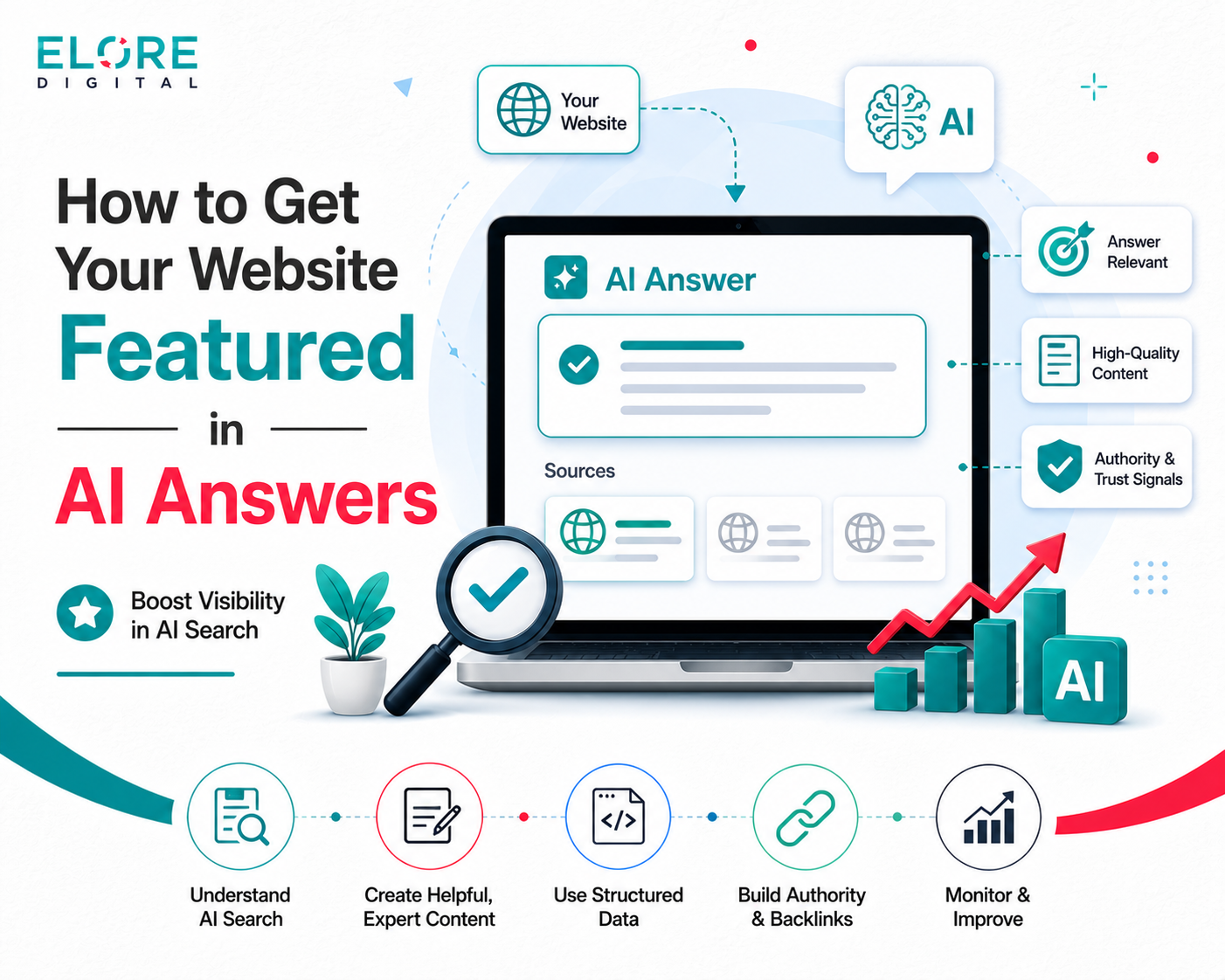
How to Get Your Website Featured in AI Answers – smart SEO strategies to help your content appear in AI-driven search results
Search is changing faster than ever, and AI answers are now becoming the first thing users see when they look for information online. Instead of scrolling through multiple websites, people are getting direct responses within seconds. This shift has made it more important for websites to create content that is clear, helpful, and easy to understand. If your content answers questions in a simple and reliable way, it has a higher chance of being picked by AI systems. In this blog, you will learn how to optimise your website so it can appear in AI answers and gain better visibility in modern search results.
1. Understanding AI Powered Search Results
AI powered search results are changing the way people find information online. Instead of showing only a list of links search engines now provide direct answers to user queries. These answers are generated using advanced systems that understand meaning context and intent. This means your content needs to be more helpful and precise than ever before. Websites that clearly answer questions have a better chance of being selected. It is no longer just about ranking high but about being useful. AI looks for content that solves problems quickly. If your website delivers value in a simple way it is more likely to appear in AI answers.
1.1 What Are AI Answers
AI answers are direct responses shown by search engines without requiring users to click on a website. These answers are created by analysing multiple sources and selecting the most relevant information. They aim to save time and improve user experience. Instead of browsing several pages users get what they need instantly. This makes competition for visibility stronger. Only the most accurate and clear content gets picked. Understanding how these answers work is the first step to optimising your website.
1.2 How AI Search Differs from Traditional Search
Traditional search focused mainly on keywords and backlinks. AI search goes deeper by understanding user intent and context. It looks at how well your content answers a question rather than how many times a keyword appears. This shift means content must feel natural and helpful. AI also evaluates the structure of your content. Pages that are easy to read and well organised perform better. The goal is to provide meaningful information instead of just attracting clicks.
1.3 Importance of AI in Modern SEO
AI has become a core part of modern SEO strategies. Search engines rely on it to deliver better results. This means websites must adapt to stay competitive. Ignoring AI can result in lower visibility over time. By aligning your content with AI expectations you improve your chances of being featured. It also helps build trust with your audience. AI favours content that is accurate and reliable. Adapting early gives you a strong advantage.
1.4 Examples of AI Answer Platforms
Many platforms now use AI to provide answers directly. Search engines like Google use AI summaries to respond to queries. Voice assistants also rely on AI answers to speak results. Chat based tools are another example where AI delivers information quickly. These platforms highlight the importance of clear content. They pull data from websites that are easy to understand. Being present on such platforms increases your reach significantly.
2. How AI Selects Content for Answers
AI systems carefully evaluate content before choosing it for answers. They analyse relevance clarity and accuracy. Content that directly addresses a question has a higher chance of being selected. AI also considers how trustworthy a website is. If your site has a good reputation it is more likely to be used. Structure plays an important role as well. Well organised content is easier for AI to process. Consistency in quality also matters. Regularly updated content signals reliability.
2.1 Ranking Factors in AI Responses
AI ranking factors go beyond traditional SEO signals. They include content clarity depth and usefulness. Pages that provide complete answers are preferred. AI also looks at engagement signals like time spent on page. If users find your content helpful it sends a positive signal. Technical performance also plays a role. Fast loading pages improve user experience. All these factors together influence selection.
2.2 Role of Content Quality and Relevance
Quality and relevance are at the heart of AI selection. Content must match what the user is searching for. It should answer the question without unnecessary details. Clear language improves understanding. Avoid adding information that does not support the topic. Staying focused helps AI recognise your content as valuable. High quality content also builds trust over time. This increases your chances of being featured.
2.3 Importance of Authority and Trust
AI prefers content from trusted sources. Building authority takes time and consistent effort. Publishing accurate and well researched information helps establish credibility. Having an author profile also adds trust. External mentions and backlinks support your authority. Users are more likely to trust your content if it feels reliable. AI reflects this behaviour in its selection process. Trust is a key factor for long term success.
2.4 How AI Uses Structured Data
Structured data helps search engines understand your content better. It provides clear signals about what your page contains. This makes it easier for AI to extract information. Adding structured data improves your chances of being featured. It also enhances visibility in search results. Proper implementation is important for best results. Simple errors can reduce effectiveness. Keeping it clean and accurate is essential.
3. Creating High Quality Relevant Content
Creating strong content is the foundation of
AI visibility. Your focus should always be on helping the reader. Content should be clear informative and easy to follow. Avoid overcomplicating ideas. Break information into simple parts for better understanding. Consistency in tone also matters. A natural writing style keeps readers engaged. AI prefers content that feels human and useful. Delivering real value is the key to success.
3.1 Writing for User Intent
Understanding user intent is essential for content creation. Think about what the reader is actually looking for. Your content should directly answer that need. Avoid guessing and focus on clarity. Research common questions in your niche. Address them in a simple way. Matching intent improves relevance. This increases the chances of being selected by AI.
3.2 Importance of Clear and Concise Information
Clear information is easier for both users and AI to understand. Avoid long and complex sentences. Keep your points simple and direct. Each paragraph should focus on one idea. This improves readability and engagement. Concise content saves time for the reader. AI also prefers content that delivers value quickly. Simplicity often leads to better results.
3.3 Using Natural Language and Readability
Natural language makes your content feel genuine. Write as if you are explaining something to a person. Avoid robotic or overly formal tone. Simple words work better than complicated ones. Readability plays a big role in engagement. If users enjoy your content they stay longer. This sends positive signals to search engines. A human tone builds trust and connection.
3.4 Avoiding Keyword Stuffing
Keyword stuffing can harm your content performance. It makes writing feel unnatural and forced. AI can easily detect this behaviour. Instead use keywords in a balanced way. Focus on meaning rather than repetition. Use variations to keep the flow natural. Quality should always come before quantity. A smooth reading experience is more important.
4. Optimising for Featured Snippets and AI Answers
Optimisation for snippets increases your visibility in search results. AI often uses snippet friendly content for answers. Structuring your content properly is important. Use clear headings and organised sections. Answer questions directly within the content. This makes it easier for AI to extract information. Consistent formatting also helps. Small improvements can make a big difference.
4.1 What Are Featured Snippets
Featured snippets are short answers shown at the top of search results. They provide quick information to users. These snippets are often selected from well structured content. Being featured increases visibility and traffic. It also builds credibility for your website. AI systems often rely on snippet content. Understanding them helps you optimise better.
4.2 Structuring Content for Snippets
Proper structure improves your chances of selection. Use headings to organise your content. Keep paragraphs short and focused. Lists and tables can be useful. Place important information at the beginning. This helps AI identify key points. A clear layout improves readability. Well structured content performs better overall.
4.3 Using Question Based Headings
Question based headings match user search behaviour. Many people search using questions. Including these in your content improves relevance. Answer each question clearly. Keep responses short and direct. This format is easy for AI to process. It also improves user experience. Simple questions lead to better engagement.
4.4 Formatting Content for Better Visibility
Formatting plays a big role in readability. Use spacing to separate ideas. Highlight important points where needed. Avoid large blocks of text. Clean formatting makes content easier to scan. This benefits both users and AI. A well presented page looks more professional. Good formatting supports better results.
5. Importance of E E A T in AI Rankings
E E A T stands for experience expertise authoritativeness and trust. These factors influence how AI evaluates content. Websites that demonstrate these qualities perform better. Sharing real experience adds value to your content. Expertise shows your knowledge in a subject. Authority builds your reputation over time. Trust ensures users feel confident in your content. Together they create a strong foundation for ranking.
5.1 Experience and Expertise
Experience shows that you understand the topic well. Sharing practical insights makes content more valuable. Expertise adds depth to your writing. It helps you explain concepts clearly. Users trust content that feels knowledgeable. AI also recognises this quality. Consistent demonstration of expertise improves credibility. It supports long term growth.
5.2 Authoritativeness in Your Niche
Authority comes from recognition within your niche. Publishing quality content regularly helps build it. Mentions from other websites also add value. A strong online presence improves credibility. Authority takes time to develop. It requires consistent effort and focus. AI prefers sources that are well known. Building authority increases your chances of being featured.
5.3 Building Trust with Your Audience
Trust is essential for engagement and retention. Be honest and accurate in your content. Avoid misleading information. Clear communication builds confidence. Users are more likely to return to trusted sites. Positive experiences lead to better signals. AI considers trust when selecting content. Strong trust improves overall performance.
5.4 Showcasing Credibility Signals
Credibility signals support your authority. These include author details and references. Adding sources improves reliability. A professional design also builds trust. Reviews and testimonials can help. Clear contact information adds transparency. These signals make your website look trustworthy. AI uses them to evaluate quality.
6. Using Structured Data and Schema Markup
Structured data improves how search engines understand your content. It provides clear information about your page. This helps AI extract relevant details easily. Adding schema markup can improve visibility. It also enhances search appearance. Correct implementation is important. Errors can reduce effectiveness. Keeping it updated ensures better results.
6.1 What Is Schema Markup
Schema markup is a type of code added to your website. It helps search engines understand your content better. This improves how your page appears in search results. It can highlight important details. Proper use increases visibility. It also supports AI understanding. Simple implementation can make a difference.
6.2 Types of Schema for AI Visibility
Different types of schema serve different purposes. Article schema is useful for blog posts. FAQ schema helps answer common questions. Local business schema improves local visibility. Choosing the right type is important. It should match your content. Proper selection improves results. Using multiple types can be effective.
6.3 Implementing Structured Data
Implementation requires careful planning. Add schema code to relevant pages. Test it to ensure accuracy. Tools can help verify your markup. Fix errors quickly if found. Consistent implementation improves results. It also supports better indexing. Regular updates keep it effective.
6.4 Common Mistakes to Avoid
Avoid using incorrect schema types. Do not add misleading information. Keep your data accurate and updated. Overuse can reduce effectiveness. Always follow best practices. Testing is important before publishing. Small mistakes can affect performance. Paying attention to detail helps.
7. Improving Technical SEO for AI Indexing
Technical SEO ensures your website performs well. It supports better crawling and indexing. Fast loading pages improve user experience. Mobile friendly design is essential. Fixing errors improves performance. Clean code helps search engines understand your site. Regular maintenance is important. Strong technical SEO supports AI visibility.
7.1 Website Speed and Performance
Speed affects both user experience and rankings. Slow websites lose visitors quickly. Optimising images improves load time. Reducing unnecessary code helps performance. Fast pages are preferred by AI. Good performance improves engagement. Regular testing is important. Small improvements can have big impact.
7.2 Mobile Optimisation
Mobile usage continues to grow. Your website must work well on all devices. Responsive design ensures consistency. Easy navigation improves usability. Mobile friendly pages rank better. AI considers mobile performance. Testing on different devices is important. A smooth experience keeps users engaged.
7.3 Crawlability and Indexing
Search engines need to access your content easily. Clear site structure supports crawling. Use proper links between pages. Fix broken links quickly. Ensure important pages are indexed. Regular checks improve performance. AI depends on proper indexing. Good structure improves visibility.
7.4 Fixing Technical Errors
Errors can reduce your website performance. Common issues include broken links and missing pages. Fix them as soon as possible. Regular audits help identify problems. Clean code improves efficiency. Technical health supports better ranking. AI prefers error free websites. Maintaining quality is important.
8. Building Strong Backlinks and Authority
Backlinks remain an important part of SEO. They show that other websites trust your content. High quality links improve authority. Focus on earning links naturally. Avoid low quality sources. Consistent effort brings better results. Authority builds over time. Strong backlinks support AI visibility.
8.1 Importance of Backlinks in AI SEO
Backlinks act as a signal of trust. They show that your content is valuable. AI considers this when selecting sources. Quality matters more than quantity. Relevant links are more effective. Building a strong profile takes time. Consistency is key. Good backlinks improve credibility.
8.2 Strategies to Earn Quality Links
Create content that others want to share. Reach out to relevant websites. Offer value in collaborations. Guest posting is a useful method. Focus on building relationships. Avoid spammy tactics. Genuine efforts bring better results. Quality links improve authority.
8.3 Guest Posting and Outreach
Guest posting helps expand your reach. It allows you to share your expertise. Choose reputable platforms for posting. Outreach builds connections in your industry. Personalised messages work better. Building trust takes time. Consistent effort brings results. This strategy supports growth.
8.4 Monitoring Backlink Profile
Regular monitoring helps maintain quality. Check for broken or harmful links. Remove low quality backlinks. Tools can help track performance. Keep your profile clean and strong. Updates improve results. Consistency is important. A healthy profile supports SEO.
9. Optimising Content for Voice Search
Voice search is becoming more popular. People use natural language when speaking. Your content should reflect this behaviour. Focus on conversational tone. Answer common questions clearly. This improves relevance for voice queries. AI uses voice data to provide answers. Optimisation helps you stay competitive.
9.1 Growth of Voice Search
Voice search usage continues to increase. More users rely on it daily. It changes how people search for information. Queries are longer and more natural. Understanding this trend is important. Adapting your content improves visibility. AI systems depend on voice data. Staying updated helps.
9.2 Conversational Keywords
Conversational keywords match natural speech. They are longer and more specific. Using them improves relevance. Focus on real questions users ask. This makes your content more useful. AI prefers natural language. Including variations helps coverage. It improves performance.
9.3 Long Tail Keyword Strategy
Long tail keywords target specific queries. They have less competition. This improves ranking chances. They match user intent more closely. Using them increases relevance. AI prefers detailed content. Long tail strategy supports growth. It improves visibility.
9.4 FAQ Optimisation
FAQ sections help answer common questions. They improve user experience. Clear answers are easy to understand. This format works well for AI. It increases chances of selection. Keep answers short and relevant. Regular updates improve performance. FAQ adds value.
10. Tracking and Improving AI Visibility
Tracking performance helps you understand progress. It shows what works and what needs improvement. Regular analysis supports better decisions. Use reliable tools for tracking. Monitor changes over time. Adjust strategies based on results. Continuous improvement is important. Staying active keeps you competitive.
10.1 Measuring Performance Metrics
Metrics show how your content is performing. Track traffic and engagement levels. Monitor rankings regularly. Identify patterns in user behaviour. Data helps improve strategy. Focus on meaningful insights. Consistent tracking supports growth. It improves decision making.
10.2 Tools for Tracking AI Rankings
Various tools can help monitor performance. They provide insights into rankings and visibility. Choose tools that suit your needs. Regular use improves understanding. Data helps identify opportunities. Tracking supports better optimisation. Consistency is key. Tools simplify analysis.
10.3 Analysing Competitor Strategies
Competitor analysis provides useful insights. Study what works for others. Identify gaps in your content. Learn from successful strategies. Adapt ideas to your approach. Avoid copying directly. Focus on improvement. Analysis supports growth.
10.4 Continuous Content Updates
Updating content keeps it relevant. Add new information regularly. Improve existing sections. Fix outdated details. Fresh content performs better. AI prefers updated information. Regular updates improve ranking. Consistency is important.
Conclusion
Getting your website featured in AI answers requires a balanced approach. Focus on creating helpful content that directly answers user questions. Maintain a natural tone and clear structure throughout your website. Pay attention to technical performance and credibility signals. Build authority over time through consistent effort. Adapt to changes in search behaviour and technology. Keep improving your content based on data and feedback. With the right strategy your website can stand out. Staying committed to quality will help you achieve long term success.




Leave A Reply