25 Mar 2026 • 9 Minutes Read
Written by Elore Digital Team
7 Ways to Build a Brand Beyond Social Media
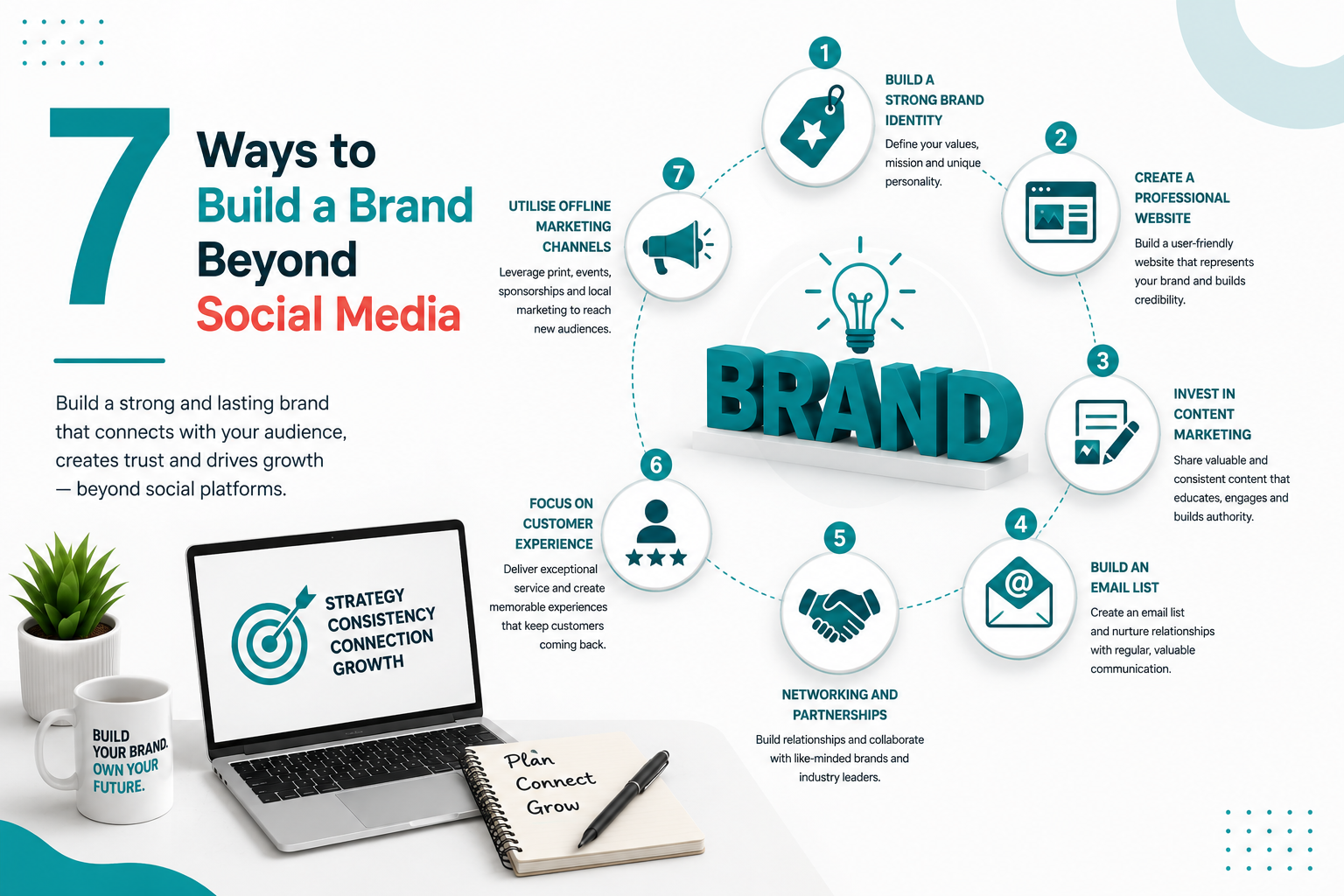
Building a strong brand goes beyond social media—focus on identity, content, relationships, and customer experience to create lasting impact and sustainable business growth.
Brand building is the process of creating a distinct identity and lasting impression in the minds of your audience. It involves consistent messaging, strong values, and meaningful customer connections. A well built brand not only attracts attention but also builds trust and long term loyalty.
The Reality of Modern Brand Building
In today’s digital landscape, many businesses assume that brand building is limited to social media presence. However, true brand building goes far beyond gaining followers or likes. A strong brand is built on trust, consistency, and long term recognition across multiple channels. It reflects not only what a business offers but also how it connects with its audience and delivers value over time.
Limitations of Social Media Dependence
Relying solely on social media can be risky, as algorithms frequently change and organic reach can decline without warning. Businesses that depend entirely on these platforms often struggle with visibility and audience control. This makes it essential to invest in platforms you own and manage, such as websites and email lists. These channels provide stability and allow direct communication with your audience.
The Importance of a Multi-Channel Approach
Building a brand beyond social media enables businesses to establish credibility, strengthen customer relationships, and create sustainable growth. It ensures that your brand remains visible and impactful, regardless of changes in external platforms. By adopting a multi-channel strategy, businesses can create a more resilient and future-proof brand presence.
In this article, we will explore seven effective ways to build a powerful brand beyond social media and achieve long term success.
1. Build a Strong Brand Identity
A strong brand identity defines how your business is perceived by your audience and sets the foundation for long term success. It combines your values, messaging, and visual elements to create a clear and consistent impression in the market.
1.1 Define your brand mission and vision
Your brand’s mission and vision provide a clear sense of direction and purpose. The mission explains what your business does and why it exists, while the vision outlines your long term goals. Together, they help shape your brand’s identity and guide decision making. A clearly defined mission and vision also help build a stronger emotional connection with your audience.
1.2 Create a unique value proposition (UVP)
A unique value proposition defines what sets your brand apart from competitors. It clearly communicates the specific benefits customers can expect from your products or services. A strong UVP makes your brand more memorable and appealing. It should be concise, clear, and focused on solving your audience’s problems.
1.3 Develop a consistent brand voice and tone
Your brand voice reflects how you communicate with your audience across all platforms. Whether formal or conversational, consistency in tone builds familiarity and trust. A well defined voice helps customers recognise your brand instantly. It also ensures that all messaging aligns with your overall brand identity.
1.4 Design a strong visual identity (logo, colours, typography)
Visual identity plays a crucial role in how your brand is perceived. A professional logo, consistent colour palette, and appropriate typography create a cohesive look. These elements help establish brand recognition and credibility. Strong visuals also make your brand more memorable across different platforms.
1.5 Maintain consistency across all platforms
Consistency is essential for building a reliable and trustworthy brand. Using the same messaging, tone, and visual elements across all channels avoids confusion. It reinforces your brand identity and strengthens recognition. Over time, consistency helps establish a strong and dependable brand image.
2. Create a Professional Website
A professional website serves as the central hub of your brand, where you have complete control over your content and messaging. It enhances credibility, improves user experience, and provides a reliable platform to showcase your products or services.
2.1 Why a website is the foundation of your brand
A website is a central platform that you fully own and control. Unlike social media, it is not affected by algorithm changes or platform restrictions. It serves as the primary source of information about your business. A professional website also enhances credibility and builds trust with your audience.
2.2 Focus on user friendly design and navigation
A user-friendly website ensures that visitors can easily find the information they need. Clear navigation and a clean layout improve the overall user experience. If a website is difficult to use, visitors are likely to leave quickly. Good design increases engagement and encourages users to explore further.
2.3 Implement basic SEO strategies
Search engine optimization (SEO) helps your website rank higher in search results. This involves using relevant keywords, optimising meta descriptions, and structuring content effectively. SEO drives organic traffic to your site without relying on paid advertising. It is a long term strategy that supports sustainable growth.
2.4 Publish high quality and valuable content
Creating valuable content helps attract and retain your target audience. Informative blog posts, guides, and resources position your brand as an authority in your industry. High-quality content also improves your SEO performance. Regular updates keep your website relevant and engaging.
2.5 Ensure speed and mobile responsiveness
Website speed and mobile responsiveness are critical for user experience. Slow-loading pages can lead to high bounce rates and lost opportunities. A mobile friendly design ensures accessibility for users on all devices. Optimised performance also contributes to better search engine rankings.
3. Invest in Content Marketing
Content marketing is a powerful way to attract, engage, and educate your target audience. By consistently delivering valuable and relevant content, you can build authority, increase visibility, and strengthen your brand over time.
3.1 Importance of blogging for brand growth
Blogging allows you to share knowledge and demonstrate expertise. It helps attract organic traffic through search engines. Regular blog posts keep your audience engaged and informed. Over time, blogging strengthens your brand authority and visibility.
3.2 Evergreen vs trending content
Evergreen content remains relevant over time and continues to attract traffic. Trending content, on the other hand, capitalises on current topics for short-term engagement. A balanced content strategy should include both types. This approach ensures consistent visibility and long term value.
3.3 Use of email newsletters
Email newsletters provide a direct way to communicate with your audience. They allow you to share updates, insights, and valuable content regularly. Unlike social media, emails reach your audience without interference from algorithms. This makes them a reliable communication channel.
3.4 Content distribution strategies
Creating content is only the first step; distributing it effectively is equally important. Sharing content across multiple platforms increases its reach and impact. A well-planned distribution strategy ensures maximum visibility. It also helps attract a broader audience.
3.5 Engage your audience through storytelling
Storytelling makes your brand more relatable and engaging. Sharing real experiences and narratives creates an emotional connection with your audience. It helps communicate your brand values effectively. Strong storytelling makes your content more memorable.
4. Build an Email List
Building an email list allows you to communicate directly with your audience without relying on third-party platforms. It provides a reliable channel to nurture relationships, share valuable content, and drive long term engagement.
4.1 Why email marketing is more reliable than social media
Email marketing provides direct access to your audience without relying on third party platforms. It is not affected by changing algorithms or declining reach. This makes it a stable and dependable communication channel. Over time, it becomes a valuable business asset.
4.2 Create effective lead magnets (eBooks, guides, etc.)
Lead magnets are valuable resources offered in exchange for contact information. Examples include eBooks, guides, and templates. They help attract potential customers and grow your email list. Effective lead magnets address specific problems or needs of your audience.
4.3 Strategies to grow your email list
Growing an email list requires consistent effort and strategic planning. Using sign up forms, landing pages, and incentives can encourage subscriptions. Offering valuable content increases conversion rates. A well maintained list supports long term engagement.
4.4 Personalise your email campaigns
Personalisation improves the effectiveness of email campaigns. Tailoring content based on user preferences increases engagement. It leads to higher open and click through rates. Personalised communication also strengthens relationships with your audience.
4.5 Build long term relationships with your audience
The goal of email marketing is to build lasting relationships, not just make sales. Providing consistent value fosters trust and loyalty. Engaged subscribers are more likely to become repeat customers. Strong relationships contribute to long-term brand success.
5. Networking and Partnerships
Networking and partnerships play a vital role in expanding your brand’s reach and credibility. By building meaningful connections and collaborating with others, you can access new audiences and create mutually beneficial growth opportunities.
5.1 Attend industry events and conferences
Industry events provide opportunities to connect with professionals and potential clients. They offer valuable insights and learning experiences. Attending such events enhances your visibility within your field. It also helps establish your presence as a serious brand.
5.2 Build strategic partnerships
Strategic partnerships allow businesses to collaborate for mutual benefit. They help expand reach and access new audiences. Working with complementary brands increases credibility. Partnerships can accelerate growth effectively.
5.3 Collaborate with influencers and creators
Collaborating with influencers can significantly boost brand awareness. Influencers have established trust with their audiences. Authentic collaborations create meaningful engagement. This approach helps reach targeted audiences effectively.
5.4 Leverage word-of-mouth marketing
Word-of-mouth marketing is one of the most powerful forms of promotion. Satisfied customers naturally recommend your brand to others. This type of marketing is highly trusted and influential. Delivering excellent experiences encourages organic referrals.
5.5 Focus on community building
Building a community creates a loyal and engaged audience. Communities provide support, feedback, and advocacy for your brand. They foster a sense of belonging among customers. A strong community contributes to long-term growth.
6. Focus on Customer Experience
Customer experience directly influences how your brand is perceived and remembered. By delivering consistent, high-quality interactions at every touchpoint, you can build trust, increase satisfaction, and encourage long-term loyalty.
6.1 The impact of customer service on branding
Customer service plays a key role in shaping brand perception. Positive experiences enhance your reputation and build trust. Poor service can quickly damage your brand image. Consistently good service strengthens customer loyalty.
6.2 Collect and implement customer feedback
Customer feedback provides valuable insights for improvement. Listening to your audience shows that you value their opinions. Implementing feedback enhances your products and services. It also builds stronger relationships with customers.
6.3 Optimise the customer journey
The customer journey includes every interaction with your brand. Ensuring a smooth and seamless experience improves satisfaction. Identifying and removing friction points increases conversions. An optimised journey leads to better retention.
6.4 Develop loyalty and retention strategies
Retaining customers is more cost-effective than acquiring new ones. Loyalty programmes and exclusive offers encourage repeat business. Strong retention strategies create a stable customer base. This contributes to consistent growth.
6.5 Build trust and credibility
Trust is the foundation of any successful brand. Transparency, honesty, and consistency build credibility over time. Customers are more likely to engage with brands they trust. Strong credibility leads to long term success.
7. Utilise Offline Marketing Channels
Offline marketing channels help strengthen your brand presence beyond the digital space and create real world connections with your audience. By combining traditional methods with modern strategies, you can enhance visibility, credibility, and overall brand impact.
7.1 Use of print media (brochures, business cards)
Print media remains effective, especially in local marketing. Brochures and business cards provide tangible brand representation. They enhance professionalism and credibility. Offline materials help reinforce brand presence.
7.2 Organise events and workshops
Hosting events allows direct interaction with your audience. It creates meaningful engagement and builds stronger connections. Events help showcase your expertise and values. They also enhance brand visibility.
7.3 Apply public relations (PR) strategies
Public relations helps manage your brand’s reputation. Media coverage increases credibility and exposure. Effective PR strategies build a positive public image. They contribute to long term brand recognition.
7.4 Engage with local communities
Engaging with local communities builds trust and loyalty. It shows that your brand is invested in its environment. Community involvement enhances your reputation. It also strengthens local brand awareness.
7.5 Use traditional advertising (TV, radio, billboards)
Traditional advertising reaches a broad audience. It complements digital marketing efforts effectively. Well executed campaigns increase brand recognition. This approach enhances overall visibility.
8. Recommendations
To build a strong and sustainable brand beyond social media, it is important to follow practical and proven strategies. The following recommendations will help you create long term value and maintain consistent brand growth.
8.1 Focus on Building Owned Assets
Businesses should prioritise platforms they fully control, such as websites and email lists. Unlike social media, these assets are not affected by algorithm changes or platform restrictions. Owned assets provide stability and long term value for brand growth. They also allow direct communication with your audience without external interference.
8.2 Maintain Consistency in Branding
Consistency in messaging, tone, and visual identity is essential for building trust. When your brand appears uniform across all channels, it becomes more recognisable and reliable. Inconsistent branding can confuse your audience and weaken your identity. A clear and consistent approach strengthens your overall brand image.
8.3 Invest in Long Term Strategies
Long term strategies such as search engine optimisation (SEO) and email marketing deliver sustainable results. Unlike short term tactics, these methods continue to generate value over time. They help build organic traffic and strong customer relationships. Consistent investment in these areas ensures steady growth.
8.4 Prioritise Customer Experience
Customer experience plays a crucial role in shaping how your brand is perceived. Providing excellent service and smooth interactions builds trust and satisfaction. Positive experiences encourage repeat business and referrals. A strong focus on customers helps create lasting loyalty.
8.5 Integrate Online and Offline Marketing
Combining online and offline marketing efforts increases overall reach and effectiveness. Digital channels provide scalability, while offline strategies build personal connections. Using both approaches together creates a more comprehensive brand presence. This integration strengthens brand visibility across multiple touchpoints.
8.6 Monitor Performance and Improve Continuously
Tracking performance helps identify what works and what needs improvement. Analysing data allows you to refine your strategies effectively. Continuous improvement ensures your brand remains competitive and relevant. Regular evaluation leads to better results over time.
Conclusion
Building a brand beyond social media requires a strategic and long term approach. While social platforms can provide visibility, sustainable success depends on owned channels, consistent branding, and meaningful customer relationships. By focusing on value, trust, and multi channel engagement, businesses can establish a strong and enduring brand presence.


Leave A Reply