20 May 2026 • 8 Minutes Read
Written by Elore Digital Team
How We Build Websites That Rank and Convert
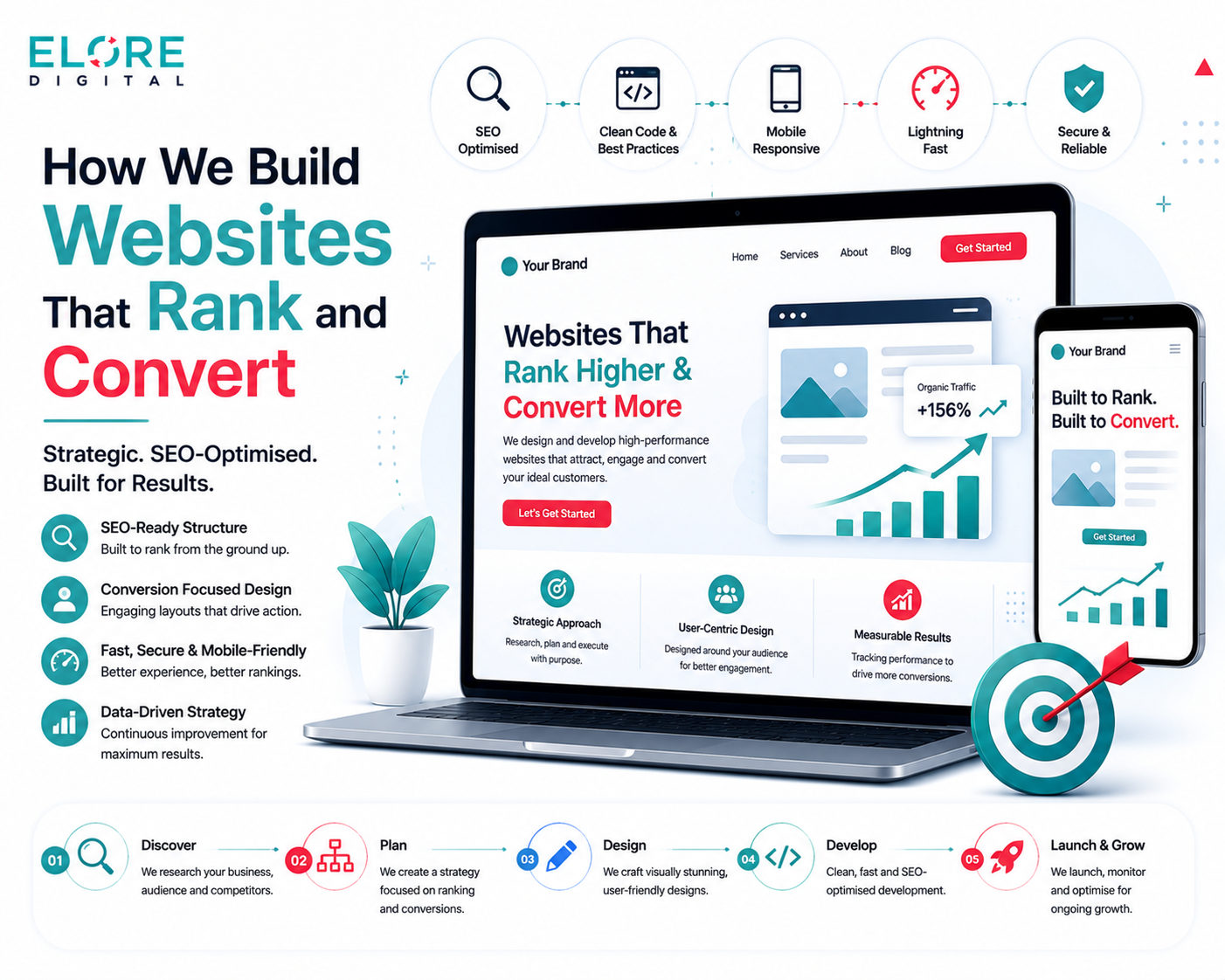
How We Build Websites That Rank and Convert – a complete approach to creating SEO-optimized, high-performing websites that drive traffic and turn visitors into customers
Every business today needs a website that not only looks attractive but also performs well on search engines and turns visitors into customers. A successful website is built with the right strategy, strong design, quality content, and technical optimization. Many businesses create websites without understanding how ranking and conversion work together. A website that gets traffic but fails to generate leads cannot deliver real business growth. This is why building a website with both search visibility and user experience in mind is extremely important.
1. Understanding the Purpose of a High Performing Website
A high performing website is more than just an online presence for a business. It acts as a marketing tool that attracts visitors, builds trust, and encourages users to take action. A good website should provide value to users while also meeting search engine requirements. Businesses that focus on both user satisfaction and visibility usually achieve better results online. The main goal is to create a website that helps users find information easily and motivates them to contact the business or make a purchase. Every successful website starts with a clear purpose and a strong strategy.
1.1 What Makes a Website Successful
A successful website combines design, speed, content, and usability in the right way. Visitors should be able to navigate the website without confusion. Fast loading pages improve the overall experience and reduce bounce rates. High quality content also helps users trust the website and spend more time exploring it. A website becomes successful when it satisfies both users and search engines.
1.2 The Connection Between Rankings and Conversions
Search engine rankings bring traffic to a website, but conversions turn that traffic into business results. A website that ranks well can attract potential customers from search engines. However, if the design and content are weak, visitors may leave without taking action. Good rankings and strong conversions work together to support business growth. This balance is essential for long term success online.
1.3 Why User Experience Matters
User experience plays a major role in website performance and customer satisfaction. Visitors prefer websites that are simple, fast, and easy to use. Clear navigation and readable content improve the browsing experience. Search engines also consider user behavior when ranking websites. A positive experience increases engagement and helps businesses build trust with users.
1.4 Setting Clear Business Goals
Every website should have clear goals before development begins. Some businesses want more leads while others focus on sales or brand awareness. Defining goals helps shape the structure and content strategy of the website. It also allows businesses to measure success more effectively. Clear planning creates a stronger foundation for long term growth.
2. Research and Planning Before Website Development
Research and planning are important steps in building a successful website. Without proper planning, websites often fail to meet business objectives. Understanding the audience and competitors helps businesses create more effective strategies. Planning also ensures that the website structure supports both search engine optimization and user experience. A well planned website performs better and delivers more consistent results over time. Every successful project begins with strong research and preparation.
2.1 Identifying the Target Audience
Knowing the target audience helps businesses create content that matches user needs. Different audiences have different interests, behaviors, and expectations. Understanding these details allows businesses to improve communication and engagement. Websites designed for the right audience usually achieve higher conversion rates. Audience research also helps improve marketing strategies.
2.2 Competitor Research and Analysis
Competitor analysis helps businesses understand what works in their industry. Reviewing competitor websites provides insights into design, content, and keyword strategies. Businesses can identify gaps and opportunities through detailed analysis. This process also helps improve website positioning in search results. Learning from competitors creates stronger strategies.
2.3 Choosing the Right Website Structure
A clear website structure improves navigation and search engine crawling. Users should be able to access important pages quickly and easily. Proper structure also helps organize content in a logical way. Search engines prefer websites with clear navigation and internal linking. A strong structure improves both rankings and user experience.
2.4 Planning Content and Conversion Strategy
Content planning ensures that every page has a clear purpose and message. Businesses should focus on creating valuable information for users.
Conversion strategies such as call to action buttons and forms should also be planned carefully. The right content can guide visitors toward taking action. Good planning improves both engagement and conversions.
3. Creating an SEO Friendly Website Structure
An SEO friendly structure helps search engines understand the website better. It also improves the browsing experience for users. Websites with organized structures are easier to navigate and index. Good structure supports internal linking and content distribution. Search engines reward websites that provide clear and useful experiences. A strong foundation improves long term ranking potential.
3.1 Importance of Clean Website Architecture
Clean architecture makes websites easier to manage and navigate. Visitors can find information quickly without confusion. Search engines can also crawl pages more efficiently. Organized structures reduce technical issues and improve performance. A clean website creates a more professional experience.
3.2 Optimizing URL Structures
Simple and descriptive URLs improve readability and search engine understanding. Users are more likely to trust clean URLs that clearly describe page content. Search engines also use URLs to understand website topics. Short and organized URLs improve the overall structure. Good optimization supports better rankings.
3.3 Internal Linking Best Practices
Internal links help users explore related pages on the website. They also help search engines discover and index content more effectively. Strategic linking improves page authority and user engagement. Businesses should connect related content naturally. Strong internal linking supports overall SEO performance.
3.4 Mobile Friendly Navigation Design
Most users now browse websites on mobile devices. Navigation should work smoothly on smaller screens without causing frustration. Mobile friendly menus improve usability and accessibility. Search engines also prioritize mobile optimized websites in rankings. Responsive navigation creates a better user experience.
4. Designing Websites for Better User Experience
Website design influences how users interact with a business online. A clean and professional design creates trust and encourages engagement. Visitors often judge a business based on its website appearance. Good design improves readability and helps users navigate easily. Modern websites should balance creativity with functionality. User focused design increases customer satisfaction and conversions.
4.1 The Role of Responsive Design
Responsive design allows websites to adapt to different screen sizes. Users can access the website comfortably on desktops, tablets, and smartphones. This flexibility improves accessibility and engagement. Search engines also favor responsive websites in rankings. A responsive design ensures consistent performance across devices.
4.2 Improving Website Loading Speed
Website speed has a direct impact on user experience and conversions. Slow websites frustrate users and increase bounce rates. Optimized images and clean coding improve loading performance. Faster websites also perform better in search engine rankings. Speed optimization is essential for modern websites.
4.3 Creating Engaging Visual Layouts
Visual layouts should guide users through the website naturally. Balanced spacing and clear sections improve readability and engagement. Attractive visuals also help create a professional image for the brand. Businesses should avoid cluttered designs that confuse users. A clean layout improves overall communication.
4.4 Building Trust Through Design Elements
Trust is an important factor in website conversions. Professional design elements such as testimonials, secure payment icons, and contact information increase credibility. Visitors feel more confident when websites appear reliable and transparent. Strong branding also improves trust and recognition. Trust focused design encourages users to take action.
5. Writing Content That Ranks and Converts
Content is one of the most important parts of any successful website. High quality content helps websites rank in search results and engage visitors. Businesses should focus on providing useful and informative content that answers user questions. Good content builds authority and trust in the industry. It also supports conversion goals by guiding users toward action. Strong content strategies improve long term online growth.
5.1 Keyword Research for Website Content
Keyword research helps businesses understand what users are searching for online. Choosing the right keywords improves visibility in search results. Businesses should focus on relevant and high value search terms. Proper keyword placement also improves content optimization. Research creates a strong foundation for content strategy.
5.2 Creating Valuable and Engaging Content
Users prefer content that provides clear and useful information. Engaging content keeps visitors interested and encourages longer browsing sessions. Businesses should write in a simple and natural tone. Valuable content also increases trust and authority. Helpful information improves user satisfaction.
5.3 Optimizing Headings and Meta Tags
Headings organize content and improve readability for users. Meta titles and descriptions help search engines understand page topics. Well optimized headings also improve keyword relevance. Clear structure makes content easier to scan and understand. Optimization supports better search visibility.
5.4 Using Calls to Action Effectively
Calls to action encourage users to take the next step. Businesses should place clear action messages throughout the website. Strong calls to action improve lead generation and conversions. Buttons and forms should be simple and noticeable. Effective guidance helps users make decisions.
6. Technical Optimization for Better Performance
Technical optimization helps websites perform smoothly and efficiently for both users and search engines. Even a well designed website can struggle if technical issues are ignored. Search engines prefer websites that load quickly, work properly on all devices, and provide a secure experience. Technical improvements also reduce errors and improve user satisfaction. A technically optimized website creates a strong foundation for long term growth. Businesses that focus on performance often achieve better rankings and higher engagement. Technical optimization is essential for maintaining a reliable and professional website.
6.1 Improving Website Speed and Performance
Website speed is one of the most important factors for user experience. Visitors expect pages to load quickly without delays. Slow websites often lose potential customers because users leave before the page fully opens. Optimizing images and reducing unnecessary code can improve performance. Faster websites create better engagement and stronger search visibility.
6.2 Implementing Schema Markup
Schema markup helps search engines understand website content more clearly. It provides additional information about pages, products, services, and reviews. Websites with schema markup may appear with rich results in search engines. This can improve visibility and increase click through rates. Proper implementation supports stronger search performance.
6.3 Ensuring Mobile Optimization
Mobile optimization ensures that websites work properly on smartphones and tablets. Most users now access websites through mobile devices. Responsive layouts and mobile friendly features improve usability. Search engines also prioritize mobile optimized websites in rankings. A smooth mobile experience increases user satisfaction and engagement.
6.4 Fixing Technical SEO Issues
Technical SEO issues can negatively affect website rankings and usability. Broken links, duplicate content, and crawl errors reduce performance. Regular audits help businesses identify and solve these problems quickly. Technical improvements also help search engines index pages correctly. Fixing issues creates a more stable and effective website.
7. Building Conversion Focused Website Pages
Conversion focused pages are designed to encourage users to take action. These pages help businesses generate leads, sales, and customer inquiries more effectively. A successful page combines strong design, clear messaging, and trust building elements. Businesses should focus on making the user journey simple and engaging. Conversion focused strategies improve the chances of turning visitors into customers. Every important page should guide users toward a clear goal. Well optimized pages increase business growth and online success.
7.1 Creating High Converting Landing Pages
Landing pages are created to focus on a specific offer or service. They should provide clear information and remove distractions for users. Strong headlines and persuasive content improve engagement. Businesses should include clear calls to action to encourage conversions. Effective landing pages generate better results from marketing campaigns.
7.2 Optimizing Contact and Inquiry Forms
Contact forms should be simple and easy to complete. Long or confusing forms often reduce conversions. Businesses should only ask for essential information from users. Clear design and fast functionality improve the overall experience. Optimized forms increase inquiries and customer interaction.
7.3 Using Trust Signals and Testimonials
Trust signals help users feel confident about a business. Customer reviews and testimonials create credibility and social proof. Security badges and professional branding also improve trust. Visitors are more likely to contact businesses that appear reliable. Strong trust elements support higher conversion rates.
7.4 Designing Effective Service Pages
Service pages should clearly explain what the business offers. Users should quickly understand the value of each service. Well written descriptions and strong visuals improve engagement. Businesses should include calls to action throughout the page. Effective service pages increase inquiries and customer interest.
Conclusion
Building websites that rank and convert requires a combination of strategy, design, content, and technical optimization. Businesses must focus on user experience while also following search engine best practices. A successful website attracts the right audience, provides valuable information, and encourages visitors to take action. Strong planning and continuous improvement help websites achieve long term growth. By focusing on both rankings and conversions, businesses can create websites that deliver real results and support future success.


Leave A Reply