05 Jun 2026 • 7 Minutes Read
Written by Elore Digital Team
How to Create a Content Cluster Strategy for Better Rankings
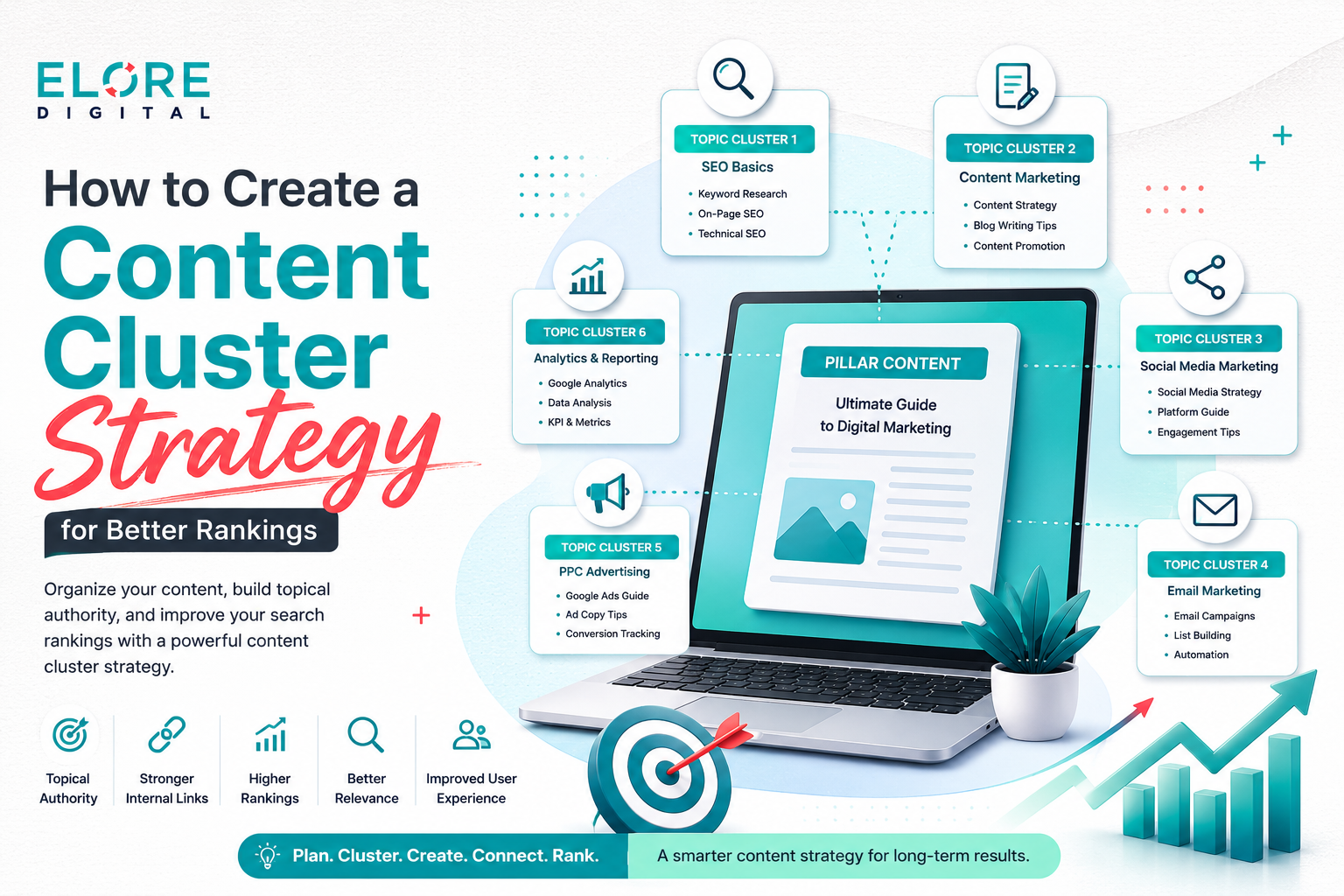
Build smarter SEO with a powerful content cluster strategy—connect your topics, boost authority, and rank higher
Creating content is no longer just about publishing individual blog posts and hoping they rank on search engines. Search engines have become much smarter and now focus on understanding the relationship between topics and content. This is where a content cluster strategy becomes essential. A content cluster helps organize related content around a central topic, making it easier for users and search engines to navigate your website. When implemented correctly, content clusters improve website authority, increase organic traffic, strengthen internal linking, and help pages rank higher for relevant keywords. Whether you run a blog, business website, or online publication, building a strong content cluster strategy can significantly improve your long term search visibility and user engagement.
1. Understanding Content Clusters and Their Importance
A content cluster is a
structured content model that organizes related articles around a central topic. Instead of creating isolated blog posts, content clusters connect multiple pieces of content through strategic internal links. This approach helps search engines understand your expertise on a subject while making navigation easier for readers. As websites continue to compete for rankings, content clustering has become one of the most effective methods for establishing authority and improving organic visibility across multiple keywords.
1.1 What Is a Content Cluster?
A content cluster is a group of interconnected articles focused on a single broad topic. The central page is usually called a pillar page, while the supporting articles cover specific subtopics. These pages are linked together to create a clear content structure. This method allows search engines to understand the relationship between topics and rank content more effectively.
1.2 How Content Clusters Work
Content clusters work by connecting a pillar page with multiple supporting articles. Each supporting article focuses on a specific keyword or question related to the main topic. Internal links guide readers between related content while helping search engines crawl the website efficiently. This structure improves topical relevance and strengthens authority signals.
1.3 Content Clusters vs Traditional Blogging
Traditional blogging often focuses on publishing standalone articles without a strategic connection between them. Content clusters, on the other hand, create a network of related content pieces. This organized approach improves user experience and strengthens keyword relevance. Search engines can better understand the depth of coverage provided by your website.
1.4 Why Search Engines Prefer Clustered Content
Search engines aim to deliver the most comprehensive answers to users. Content clusters demonstrate expertise by covering a topic from multiple angles. This increases the likelihood of ranking for a broader range of keywords. Websites using content clusters often experience improved visibility and stronger organic performance over time.
2. The Role of Pillar Pages in a Content Cluster Strategy
Pillar pages serve as the foundation of a content cluster strategy. They provide a broad overview of a topic while linking to detailed supporting articles. A strong pillar page acts as a content hub that connects all related resources. This not only improves navigation but also helps distribute authority across multiple pages. Creating an effective pillar page is one of the most important steps in building a successful content cluster.
2.1 What Is a Pillar Page?
A pillar page is a comprehensive resource covering a broad topic. It introduces key concepts and provides links to more detailed articles. The page acts as the central hub within a content cluster. Readers can use it as a starting point for exploring related information.
2.2 Choosing the Right Pillar Topic
Selecting the right pillar topic is essential for long term success. The topic should be broad enough to support multiple subtopics. It should also align with your audience's interests and business goals. A well chosen pillar topic creates opportunities for future content expansion.
2.3 Key Elements of an Effective Pillar Page
An effective pillar page includes comprehensive information, clear navigation, and strategic internal links. It should provide value while encouraging users to explore supporting content. High quality visuals and organized sections improve readability. The goal is to create a resource that users find genuinely useful.
2.4 Examples of Successful Pillar Pages
Successful pillar pages often cover broad subjects such as digital marketing, content marketing, or search engine optimization. These pages connect readers with detailed guides and tutorials. They serve as authoritative resources within their niche. Their structure helps both users and search engines understand content relationships.
3. Keyword Research for Building Content Clusters
Keyword research forms the backbone of every successful content cluster strategy. Without proper keyword planning, it becomes difficult to identify relevant subtopics and content opportunities. Effective keyword research helps uncover what users are searching for and how different topics connect. By organizing keywords strategically, you can create content that addresses user needs while maximizing search visibility.
3.1 Finding Primary Keywords
Primary keywords represent the main topic of your content cluster. These keywords usually have higher search volume and broader intent. They often become the focus of pillar pages. Selecting strong primary keywords creates a solid foundation for your content strategy.
3.2 Discovering Long Tail Keywords
Long tail keywords target specific questions and search queries. These keywords often have lower competition and higher conversion potential. Supporting articles within a cluster typically focus on long tail keywords. This helps capture targeted traffic from various search intents.
3.3 Understanding Search Intent
Search intent refers to the reason behind a user's search query. Some users seek information while others look for products or services. Understanding intent helps create content that matches audience expectations. Relevant content improves engagement and ranking potential.
3.4 Organizing Keywords for Cluster Content
After identifying keywords, they should be grouped into logical categories. Each group should relate to the central pillar topic. This organization makes content planning more efficient. It also ensures complete coverage of important subject areas.
4. Creating High Quality Cluster Content
The quality of your supporting content directly impacts the success of your content cluster strategy. Every article should provide valuable insights while addressing a specific aspect of the broader topic. Well written cluster content attracts readers, earns backlinks, and strengthens topical authority. Consistency and relevance are key factors when creating supporting articles.
4.1 Developing Relevant Subtopics
Subtopics should directly relate to the main pillar topic. They should answer common questions and address user concerns. Relevant subtopics create a comprehensive content ecosystem. This approach improves the overall value of your website.
4.2 Writing Comprehensive Supporting Articles
Supporting articles should provide detailed information on specific subjects. Readers should be able to find practical answers and useful insights. Comprehensive content encourages longer engagement. It also increases the likelihood of earning search visibility.
4.3 Maintaining Content Relevance
Content should remain aligned with user needs and industry trends. Outdated information can reduce credibility and performance. Regular reviews help ensure accuracy and relevance. Fresh content signals value to both users and search engines.
4.4 Optimizing Content for Readers
Content should be easy to read and understand. Clear formatting and logical organization improve user experience. Visual elements can enhance engagement and comprehension. Reader focused content often performs better in search results.
5. Building a Strong Internal Linking Structure
Internal linking is one of the most important elements of a content cluster strategy. It connects related pages and guides users through your website. Effective internal linking also helps search engines understand content relationships and distribute authority. A well planned linking structure can significantly improve rankings and user engagement.
5.1 Why Internal Linking Matters
Internal links help users discover related content. They improve navigation and reduce bounce rates. Search engines use internal links to understand website structure. Strong linking practices contribute to better indexing and visibility.
5.2 Linking Cluster Pages to Pillar Pages
Every supporting article should link back to the pillar page. This creates a clear connection between content pieces. The pillar page should also link to relevant supporting articles. These connections strengthen the overall content cluster.
5.3 Anchor Text Best Practices
Anchor text should accurately describe the destination page. Relevant anchor text provides context for users and search engines. Over optimization should be avoided. Natural and descriptive wording is generally the most effective approach.
5.4 Common Internal Linking Mistakes
Many websites fail to connect related content effectively. Broken links and irrelevant anchor text can reduce performance. Excessive linking may also create confusion. Regular audits help identify and resolve linking issues.
6. Optimizing Content Clusters for Better Rankings
Creating a content cluster is only the beginning. Continuous optimization is necessary to maximize performance and rankings. Improving user experience, enhancing authority, and updating content regularly contribute to long term success. Optimization ensures that your content remains competitive in evolving search environments.
6.1 Improving User Experience
User experience plays a major role in search performance. Easy navigation and clear content structure encourage engagement. Fast loading pages contribute to positive interactions. Satisfied users are more likely to explore additional content.
6.2 Enhancing Topical Authority
Topical authority is built through consistent coverage of a subject. Publishing high quality content across related areas demonstrates expertise. Search engines recognize websites that provide comprehensive information. Strong authority often leads to improved rankings.
6.3 Updating Existing Content
Content should be reviewed and updated regularly. New information and industry changes may affect accuracy. Updating content helps maintain relevance and competitiveness. Refreshed pages often perform better in search results.
6.4 Increasing Engagement Metrics
Engagement metrics provide insights into user behavior. Longer session durations and lower bounce rates indicate valuable content. Interactive elements can encourage deeper engagement. Improved engagement often supports better search visibility.
7. Measuring and Improving Cluster Performance
A content cluster strategy should be monitored continuously to identify strengths and weaknesses. Tracking performance helps determine which topics generate traffic and engagement. Data driven improvements ensure long term growth and better results. Consistent analysis allows businesses to refine their content strategy and maximize return on investment.
7.1 Tracking Organic Traffic
Organic traffic is a key indicator of content performance. Growth in traffic suggests improved visibility and relevance. Monitoring trends helps identify successful content. Analytics tools provide valuable insights into visitor behavior.
7.2 Monitoring Keyword Rankings
Keyword rankings reveal how well content performs in search results. Tracking rankings helps measure progress over time. Significant changes may indicate opportunities or challenges. Consistent monitoring supports informed decision making.
7.3 Evaluating User Behavior Metrics
Metrics such as session duration and page views offer valuable information. They help determine whether users find content useful. Understanding user behavior can guide content improvements. Better experiences often lead to stronger performance.
7.4 Continuous Content Optimization
Content optimization should be an ongoing process. Performance data can reveal areas for improvement. Updating content and strengthening internal links can enhance results. Continuous refinement helps maintain long term competitiveness.
Conclusion
A content cluster strategy is one of the most effective ways to improve website rankings, strengthen topical authority, and create a better experience for users. By organizing content around pillar pages and supporting articles, businesses can establish clear topic relevance and increase visibility across a wide range of keywords. Successful content clusters rely on careful keyword research, high quality content creation, strategic internal linking, and ongoing optimization. When implemented correctly, this approach not only improves search performance but also helps build trust, authority, and long term growth for your website.


Leave A Reply