How to Build Backlinks in 2026: What Still Works and What Doesn't
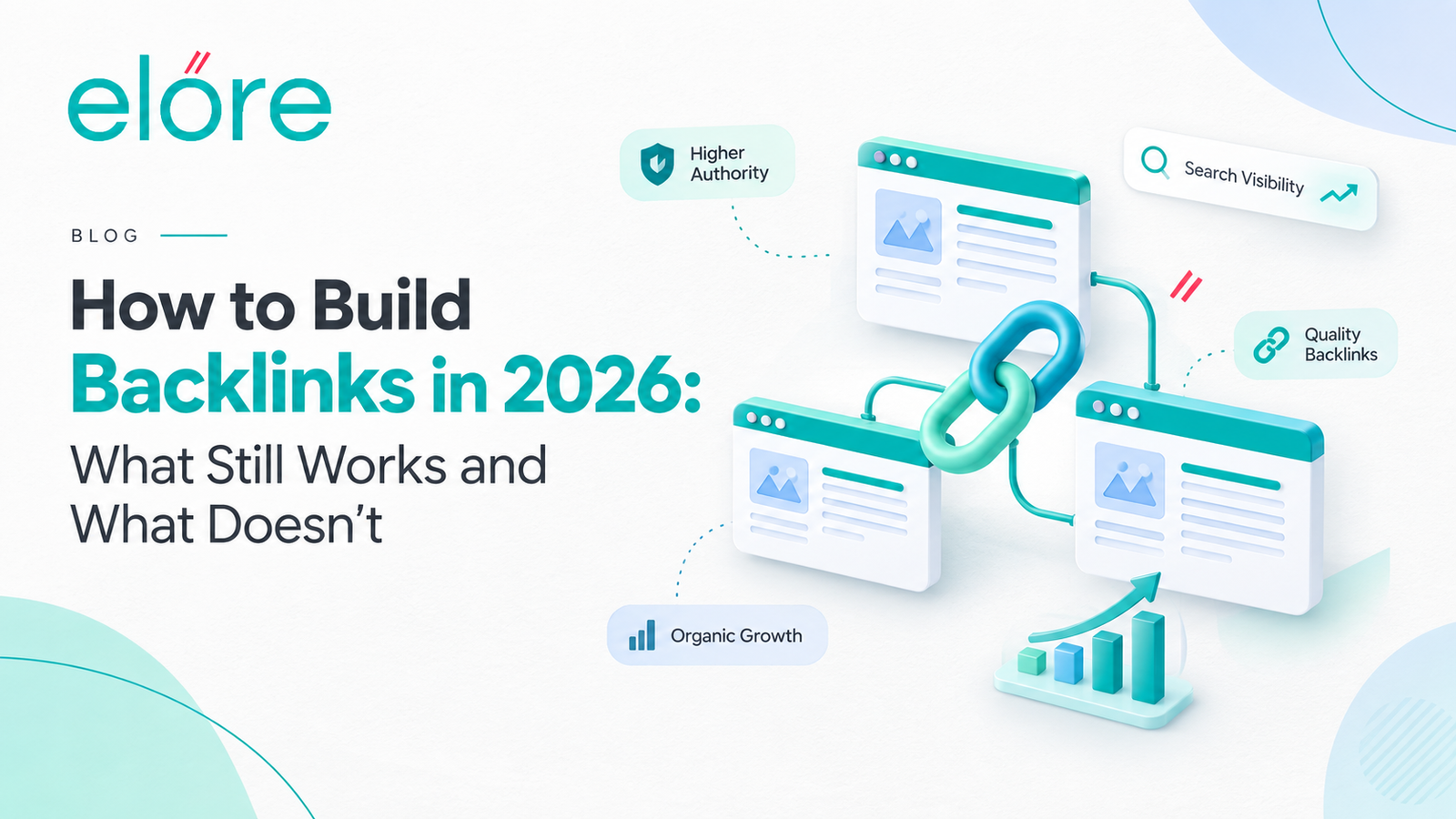
Building high quality backlinks in 2026 to improve search visibility, website authority, and organic growth.
Share:
Backlinks remain one of the top ranking signals Google uses to judge trust and authority in 2026, but the rules for earning them have changed dramatically. If you are still relying on tactics from five years ago, you are probably wasting time, or worse, putting your site at risk of a penalty.
This guide breaks down exactly how to build backlinks in 2026 using methods that survive Google's spam updates and hold up under AI-powered search evaluation. In this guide you'll learn which link building strategies still deliver real results, which tactics have become dangerous shortcuts, how to structure outreach that actually gets replies, and how to measure whether your backlink strategy is working.
Whether you run a small UK business, manage an in-house SEO team, or you're a solo blogger trying to compete with bigger sites, the approach below is built for sustainable growth rather than quick wins that disappear after the next algorithm update.
Table of Contents
Why Backlinks Still Matter in 2026
What Makes a Backlink High Quality in 2026
Link Building Strategies That Still Work
Link Building Tactics That No Longer Work
How to Build a Repeatable Backlink Strategy
How to Measure and Maintain Your Backlink Profile
Frequently Asked Questions
Why Backlinks Still Matter in 2026
A backlink is a link from another website pointing to yours, and search engines still treat it as a vote of confidence in your content. Google continues to rank backlinks among its top ranking factors, and most SEO professionals expect that influence to hold for the foreseeable future.
Backlinks as a Trust Signal
Search engines cannot ask real people whether a website is trustworthy, so they rely on proxies. A link from an established, relevant website tells Google that someone with their own reputation on the line was willing to point their audience toward your content. The more relevant and authoritative that source, the stronger the signal.
The Shift From Volume to Relevance
Ten backlinks from respected, topically relevant sites will outperform two hundred backlinks from random directories almost every time. This is not a new idea, but in 2026 it is enforced far more strictly. Google's spam-detection systems, including its SpamBrain classifier, are now sophisticated enough to separate genuine editorial links from manufactured ones with far greater accuracy than even two years ago.
Backlinks and AI Search Engines
Here is what has genuinely changed: AI-powered search tools such as Google AI Overviews, Perplexity, and ChatGPT Search also lean on backlink signals when deciding which sources to cite. These systems tend to favour websites that already show up as credible, well-linked sources across the web. In practice, this means a weak backlink profile can now cost you visibility in two places at once, traditional search rankings and AI-generated answers.
What Makes a Backlink High Quality in 2026
Before building links, it helps to know what "good" actually looks like, because not every link carries equal weight.
Topical Relevance
A link from a site that covers a related subject carries far more weight than a link from an unrelated site, even if the unrelated site has higher authority metrics. A gardening blog linking to your accounting software review does very little for your rankings, no matter how popular that gardening blog is.
Domain Authority and Real Traffic
Domain authority scores are a useful shorthand, but they should never be the only metric you chase. A site with a high authority score but almost no real visitors is often a sign of a manipulated or low-value link source. Check whether the site actually receives organic search traffic before treating a link opportunity as valuable.
Editorial Placement
The strongest backlinks are ones that would exist even if search engines did not. If a journalist links to your original research because it genuinely supports their article, or a competitor's audience finds your comparison guide useful enough to reference, that link reflects real value rather than manufactured placement.
Anchor Text Diversity
Natural link profiles include a healthy mix of anchor text: your brand name, generic phrases like "this guide" or "read more," naked URLs, and occasionally an exact-match keyword. A profile stuffed with the same exact-match keyword anchor text repeatedly is one of the clearest signals of manipulation to Google's algorithms.
Signal
High-Quality Link
Low-Quality Link
Relevance
Same or adjacent topic/niche
Unrelated subject matter
Placement
Naturally within editorial content
Footer, sidebar, or comment section
Anchor text
Varied and natural
Repetitive exact-match keywords
Site traffic
Real, verifiable organic visitors
Little to no organic traffic
Link pattern
Isolated, earned individually
Part of a bulk network or exchange
Source type
News site, industry publication, respected blog
Link farm, PBN, or paid directory
Link Building Strategies That Still Work
These are the backlink building strategies that continue to deliver measurable results without putting your site at risk.
Digital PR and Original Data
Digital PR has become one of the most effective link building strategies available, and it works by giving journalists something worth covering rather than asking for a link directly. This could be original survey data, a timely reaction to breaking industry news, or a unique expert angle on a story already in the news cycle. A UK insurance comparison site that surveys 1,000 drivers about fuel costs and publishes the results with clear charts is far more likely to earn coverage from national outlets than a site that simply asks bloggers for a mention.
You do not need a large PR team to succeed here. Small brands with a genuinely useful dataset or a sharp expert opinion regularly out-earn larger competitors because journalists care about the story, not the size of the company behind it.
Linkable Assets
A linkable asset is a page built specifically to attract links because it solves a real problem. Calculators, templates, glossaries, statistics pages, and industry benchmark reports all fall into this category. Once published, these assets can continue earning backlinks for years with very little ongoing outreach, because other content creators naturally cite them as a reference point.
Broken Link Building
Broken link building still works when it is done with precision. The process is simple: find pages on relevant websites that link to a resource which no longer exists, then offer your own content as a natural replacement. This tactic succeeds because it genuinely helps the site owner fix a problem on their page, rather than asking them for a favour with nothing in return.
Guest Posting Done Properly
Guest posting is still effective in 2026, but only when the goal is contributing something genuinely useful to a relevant audience, not simply placing a link. The difference matters enormously to search engines. A guest post published on a real site with an active readership, written specifically for that audience, and containing one contextual link back to a genuinely relevant resource, still earns value. Mass guest posting across dozens of low-quality sites with the same recycled article does the opposite.
Competitor Backlink Analysis
Reviewing where your competitors earn their links can reveal repeatable opportunities, but it has to be done selectively. Not every competitor backlink is a realistic target, since some exist because of partnerships or local associations you are not part of. The useful approach is to look for sites that link to multiple competitors around a specific type of content, then ask whether you can create a more useful, more current version of that same resource.
Local and Community Link Building
For businesses with a physical or regional presence, local link building remains one of the most underused strategies. Partnering with non-competing local businesses, sponsoring community events, or contributing to chamber of commerce and local news sites can produce links that are both relevant and difficult for competitors to replicate.
HARO-Style Expert Contributions
Responding to journalist queries with genuine expertise, through platforms that connect sources to reporters, remains a reliable way to earn links from established publications. The key is speed and specificity. Generic, vague responses rarely get used, while a sharp, quotable answer with a real credential behind it often does.
Link Building Tactics That No Longer Work
Some tactics that once moved rankings are now actively harmful. Avoiding them is just as important as knowing what to pursue.
Buying Links
Purchasing backlinks directly violates Google's webmaster guidelines, and detection has improved sharply with newer versions of Google's spam-detection systems. The short-term ranking bump, if there is one at all, is rarely worth the long-term risk of a manual penalty and months of recovery work.
Private Blog Networks (PBNs)
PBNs are networks of websites, often built on expired domains with some authority left over, created solely to pass links to a target site. Detection is now close to automatic. When a PBN gets caught, every site linked from it can be penalised simultaneously, not just devalued, which means the fallout spreads far beyond the original target.
Mass Guest Posting on Low-Quality Sites
Publishing the same article, or near-identical variations of it, across dozens of unrelated or low-authority sites is now treated as a spam pattern rather than a legitimate strategy. This differs from genuine guest posting, which focuses on relevance and audience value rather than link volume.
Comment and Forum Link Spamming
Dropping links into blog comments or forum signatures produces close to zero SEO value in 2026. These links are almost always nofollow, rarely pass meaningful authority even when they are not, and can flag your site as a low-effort spam source if done at scale.
Reciprocal Link Exchanges at Scale
Occasional, natural link exchanges between genuinely related sites are not inherently harmful. But large-scale "you link to me, I'll link to you" schemes follow a detectable pattern, and search engines are trained to spot and neutralise them.
"Guaranteed Links" Services
Any agency or freelancer promising a fixed number of backlinks per month for a flat fee should raise an immediate red flag. No legitimate link builder can guarantee an editorial placement, because you cannot force an independent publisher to link to you. Guarantees like this almost always mean paid, low-quality, or manufactured links.
How to Build a Repeatable Backlink Strategy
A one-off campaign rarely produces lasting results. A repeatable process does.
Start With Content Worth Linking To
Most failed link building efforts start with outreach instead of an asset worth linking to. Before pitching anyone, make sure you have a page, tool, or piece of research that genuinely earns a link on its own merit. Publishing first and asking for links to thin, generic content wastes both your time and the recipient's.
Build a Realistic Target List
Rather than mass-emailing hundreds of sites, build a shortlist of 20 to 30 genuinely relevant publications, bloggers, or journalists per campaign. Prioritise sites that already link to content similar to yours, since that is the clearest evidence they are open to linking on this exact topic.
Personalise Outreach and Expect Follow-Ups
Generic outreach templates that simply ask for a backlink get ignored or deleted. Reference something specific about the recipient's previous work, explain clearly why your resource helps their audience, and keep the message short. Most replies happen on a follow-up message rather than the first email, so build at least one polite follow-up into every outreach sequence.
Diversify Your Link Sources
Relying on a single tactic, such as guest posting alone, creates a backlink profile that looks unnatural and leaves you exposed if that one channel stops working. A healthy strategy blends digital PR, linkable assets, broken link building, and relationship-based outreach so no single source dominates your profile.
How to Measure and Maintain Your Backlink Profile
Building links is only half the job. Monitoring them protects the results.
Track Referral Traffic, Not Just Link Count
A backlink that never sends a single visitor and comes from a page with no real audience is doing very little for you beyond a number on a report. Prioritise tracking referral traffic and ranking movement over raw link counts when judging whether a campaign worked.
Audit for Toxic Links Regularly
Even without buying links yourself, spammy sites sometimes link to you without permission, and negative SEO attacks do happen. Review your backlink profile periodically using tools such as Google Search Console, Ahrefs, or Semrush, checking for unrelated sites, repetitive anchor text, or sudden spikes in low-quality links.
Know When to Disavow
If you find toxic links you did not build yourself and cannot get removed through a direct request, Google's disavow tool lets you tell search engines to ignore them when assessing your site. This should be a targeted, occasional action rather than a routine step, since disavowing legitimate links by mistake can hurt more than it helps.
Set Realistic Timelines
Individual links can start passing authority within days of being crawled, but meaningful ranking movement from a sustained link building campaign typically takes three to six months. Search engines evaluate patterns over time rather than reacting to single links, so patience is part of the strategy, not a sign that something is wrong.
FAQs
Yes. Backlinks remain one of Google's top ranking factors, but only when earned through genuine value rather than manipulation. Spammy tactics like buying links or mass outreach no longer produce results and now carry real penalty risk.
There is no fixed number. A handful of relevant, high-authority backlinks typically outperforms hundreds of low-quality ones. Focus on relevance and editorial placement rather than chasing a specific link count.
No. Google's spam-detection systems now identify PBN footprints with high accuracy, often within days rather than months. When caught, every site linked from the network can be penalised at once, making the risk far outweigh any short-term gain.
A link can start passing authority within days of being crawled, but noticeable ranking movement from a sustained campaign usually takes three to six months, since search engines assess patterns over time.
A reputable agency builds links through outreach, digital PR, and content, and never guarantees a fixed number of links per month. Any provider promising guaranteed link volume at a low flat fee is almost certainly using paid or manufactured links.
Conclusion
Backlinks are still one of the strongest ranking signals available in 2026, but the path to earning them has narrowed considerably. Three things matter most: build content genuinely worth linking to before you start outreach, prioritise relevance and editorial placement over raw link counts, and stay far away from PBNs, bought links, and mass guest posting, all of which now carry serious penalty risk.
If you take one thing from this guide, let it be this: sustainable backlink growth is slower than shortcuts, but it is the only approach that still works reliably in 2026. Start with one linkable asset, build a shortlist of genuinely relevant sites, and commit to outreach as an ongoing habit rather than a one-time campaign.
Stay ahead with expert insights on Digital Marketing, SEO, Website Design, Web Development, PPC, Social Media Marketing, and Content Marketing. Explore the latest industry trends, practical strategies, and proven techniques to grow your online presence. Subscribe today and receive valuable updates, expert tips, and actionable advice directly in your inbox.
Have valuable digital marketing insights to share?
Write for Elore Digital and showcase your expertise to a growing audience of marketers, business owners, and industry professionals.


Leave A Reply